
Introduction to the new economic package
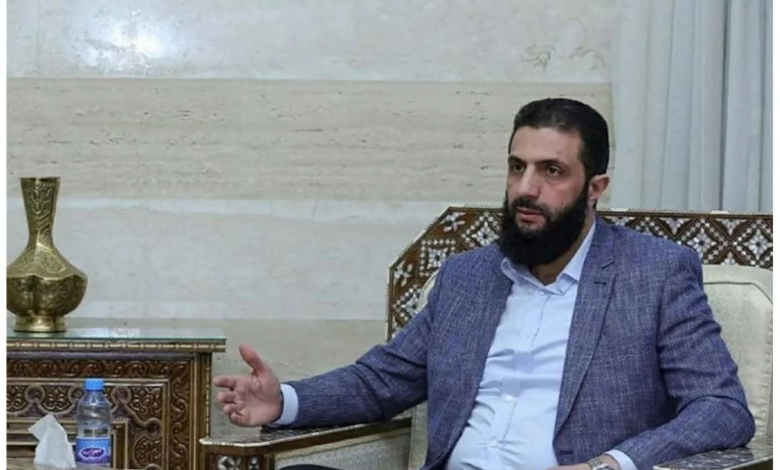
In a move aimed at improving living conditions and boosting development, Syrian President Ahmed al-Sharaa announced today a broad and comprehensive package of economic and service-related measures. This announcement came during his reception of well-wishers on the occasion of Eid al-Fitr at the People's Palace in Damascus. The package is headlined by decisive measures, most notably a 50% increase in public sector salaries and wages, in addition to raising the salaries of workers in several vital specialized sectors, reflecting a serious commitment to easing the economic burden on citizens.
Historical context and challenges of the Syrian economy
These decisions come at a pivotal moment in Syria's history. For over a decade, the Syrian economy has suffered a sharp decline as a result of the conflict, which has led to widespread destruction of infrastructure, a dramatic devaluation of the local currency, and soaring inflation. President al-Sharaa clearly outlined this context, explaining that Syria's GDP in 2010 was estimated at around $60 billion before the situation deteriorated dramatically. Statistics after the liberation indicate a significant decline by 2024. This decline has made swift government intervention an urgent necessity to salvage living conditions and restructure the economy.
Economic growth indicators and the general budget
New government figures reveal a remarkable positive shift in the trajectory of the Syrian economy. The president explained that government spending in 2024 reached approximately $2 billion. By 2025, a significant leap had been achieved, with growth rates ranging between 30% and 35%, raising the GDP to around $32 billion, while spending reached $3.5 billion. For the first time in modern Syrian history, a budget surplus was recorded. The positive outlook continues, with the approved budget for 2026 estimated at approximately $10.5 billion, a threefold increase compared to 2025 and a fivefold increase compared to 2024—a substantial economic achievement accomplished in a short period of just over a year.
Reconstruction plan and ending the camp crisis
One of the most significant humanitarian consequences of the Syrian crisis is the problem of internal displacement. In this regard, President al-Sharaa emphasized that ending the problem of camps and enabling citizens to return safely to their villages and towns, which were destroyed by the former regime, is a top priority for the next phase. To achieve this, a strategic plan has been developed and substantial funds have been allocated for the rehabilitation of infrastructure, with a particular focus on the most affected areas, such as the rural areas of Idlib, Aleppo, northern Hama, northern Latakia, as well as parts of Eastern Ghouta, Daraa, and Deir ez-Zor.
Expected impact and economic sovereignty
To ensure the sustainability of the reconstruction process, a special infrastructure support fund with a budget of at least $3 billion was announced. The most important aspect of this fund is its complete reliance on domestic government spending, with a firm commitment to avoiding foreign aid or international loans. This strengthens the country's economic sovereignty and reduces its dependence on foreign entities. Domestic production is expected to reach between $50 and $60 billion this year, returning to 2010 levels. This will have a direct and positive impact on the quality of services provided to citizens, contribute to the stability of the domestic market, and pave the way for Syria's return as an influential economic player in the region.