
A cultural and creative renaissance within the framework of Saudi Vision 2030
The Kingdom of Saudi Arabia has recently witnessed an unprecedented cultural and creative renaissance, driven by the goals of Saudi Vision 2030, which aims to diversify national income sources and reduce dependence on oil. At the heart of this strategic transformation, the fashion sector stands out as one of the most promising economic and cultural pillars. This focus was demonstrated by the establishment of the Fashion Commission, affiliated with the Ministry of Culture, which has taken on the responsibility of regulating the sector and supporting local talent to reach international recognition. Reflecting this growing cultural and creative momentum, Jeddah hosted one of the world's leading institutions specializing in fashion, design, and luxury education, in an event that solidifies the Kingdom's position as a rising destination in the world of fashion.
Strategic partnership to support local talent
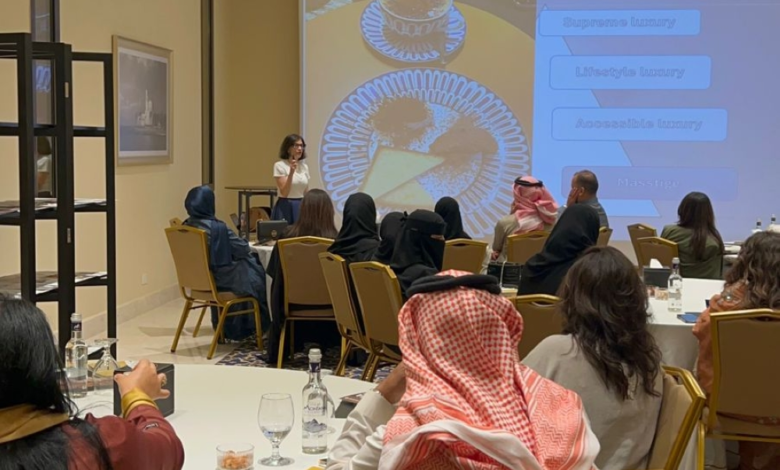
This landmark event was one of the institute's first activities in Jeddah, featuring an exclusive masterclass organized by the Italian Consulate General in partnership with the Ministry of Culture and the Saudi Fashion Commission. The event was attended by the Italian Consul General in Jeddah, Leonardo Costa, along with a select group of creatives, industry experts, and emerging Saudi talents. This international collaboration represents a significant step towards transferring global expertise and localizing knowledge in the fashion industry, opening up vast opportunities for creative young Saudis.
Anna Zainola reveals the transformations in the Saudi fashion sector
In the main focus of the event, Dr. Anna Zainola highlighted the rapid and positive transformations taking place in the Kingdom's fashion sector. In an interview with Al-Youm newspaper, she emphasized that the institute's launch in Riyadh came at a strategic time, coinciding with remarkable growth in the field, overcoming initial challenges. Dr. Zainola explained that just one year after opening its Riyadh branch, the institute now boasts a growing number of students enrolled in intensive three-year academic programs in Fashion Design and Fashion Business Management, in addition to annual programs and short professional courses.
The Italian expert noted that the start of the second academic year is witnessing a clear and increasing turnout of Saudi students, reflecting the sector's dynamism and promising future. She emphasized that fashion culture in Saudi Arabia is undergoing a remarkable maturation, driven by a strong passion among individuals that extends beyond design to encompass all elements of the industry's value chain, from manufacturing and production to photography, marketing, and styling. This comprehensive awareness demonstrates the transformation of fashion into a fully integrated economic and creative system.
The concept of well-being: from scarcity to cultural identity
During the event, Zenola presented an exceptional masterclass titled “Understanding Luxury: From Exclusive Scarcity to Everyday Status.” The session addressed the profound global shifts in the concept of luxury, noting its transition from being solely based on scarcity and traditional craftsmanship to more flexible and inclusive concepts linked to cultural identity, accessibility, and self-expression. It also explored the changing behaviors and expectations of modern consumers.
Through global case studies, the session illustrated how major brands are redefining the concept of luxury in terms of product quality, customer experience, and communication strategies. This aligns perfectly with the rapid growth of the fashion market in the Kingdom and its increasing influence regionally and globally, as Saudi consumers have become among the most discerning and influential in the luxury market.
Marangoni Institute: A global legacy and a local impact
This strong presence comes at a time when the Marangoni Institute continues to play a pivotal role in enriching the dialogue on fashion education in the Kingdom. Founded in Milan, Italy in 1935, the institute is one of the most prestigious educational institutions in the field, having graduated thousands of specialists who lead the luxury industry worldwide. It welcomes approximately 5,000 students annually from over 100 countries across its campuses located in the world's fashion capitals. Recently, it was ranked among the top 50 universities globally for arts and design, securing the 45th position in the 2026 QS World University Rankings.
In the local context, the Riyadh branch represents a strategic hub for developing Saudi talent by offering specialized educational programs aligned with the latest international standards and the needs of the local labor market. Zainola's statements, and the significant engagement witnessed at the Jeddah event, clearly indicate a growing interest in the fashion sector as a key pillar of the creative economy and a promising avenue for empowering the next generation of Saudi innovators to lead the industry's future both locally and internationally.