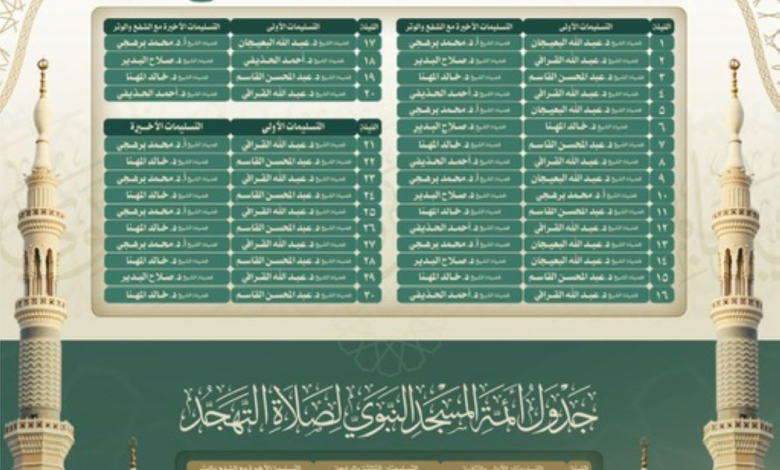
Approval of the Taraweeh and Tahajjud prayer schedule at the Two Holy Mosques for Ramadan 1447 AH

As part of intensive preparations for the holy month of Ramadan, the General Presidency for the Affairs of the Two Holy Mosques announced the official schedule for Taraweeh and Tahajjud prayers at the Grand Mosque in Mecca and the Prophet's Mosque in Medina for the year 1447 AH. This announcement is a key component of the operational plan for Ramadan, which aims to provide the utmost comfort and tranquility for pilgrims and worshippers.
Precise standards to ensure the smooth flow of worship
The Presidency explained in its statement that the schedule was prepared according to precise criteria that took into account the chronological order and the distribution of tasks among the imams and muezzins. This methodology aims to ensure the smooth performance of prayers and avoid any overcrowding that might impede the movement of the millions of pilgrims who flock to the Two Holy Mosques during this blessed month, thus enhancing the spiritual and religious atmosphere that distinguishes Mecca and Medina from all other places on earth.
The spiritual and global significance of the prayers at the Two Holy Mosques
The Taraweeh and Tahajjud prayers in the Two Holy Mosques hold a special significance that transcends local boundaries. During the nights of Ramadan, the eyes and hearts of Muslims across the globe turn towards the Holy Kaaba and the Prophet's Mosque. These prayers constitute a global spiritual event, broadcast live to millions of viewers worldwide. This makes meticulous organization and the selection of imams with melodious voices crucial for conveying the message of the Two Holy Mosques and strengthening the bonds of faith among Muslims.
Crowd management and the impact of the approved schedule
The approved schedule not only designates the names of the imams but also plays a pivotal role in crowd management and regulating the flow of worshippers within the Two Holy Mosques and their courtyards. Through precise timings and continuous coordination with security and service authorities, the schedule contributes to creating a safe and comfortable environment for worship, allowing worshippers to perform their prayers with devotion and tranquility, free from crowding or chaos. This reflects the significant development in the services provided at the Two Holy Mosques.
A call to adhere to official instructions
In closing, the General Presidency for Religious Affairs called upon all pilgrims and visitors to review the approved schedule and its details on its official platforms. It also stressed the importance of adhering to the instructions and regulations issued by the relevant authorities, emphasizing that the cooperation of worshippers is the cornerstone of the Ramadan plan's success and the safety of all. This effort is an extension of the Presidency's ongoing commitment to enriching the religious and organizational experience of pilgrims and to furthering the noble mission of the Two Holy Mosques in serving Islam and Muslims.