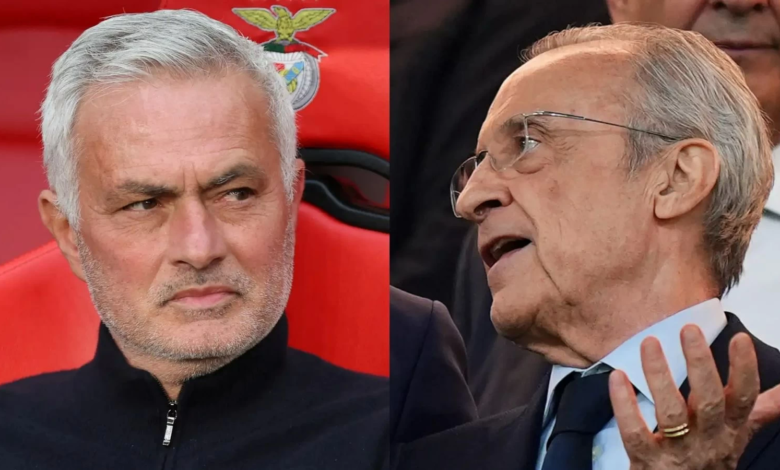

In a move that could reshape European football, rumors have resurfaced strongly in sporting circles about the potential return of the controversial Portuguese coach, José Mourinho, to the Real Madrid bench. According to reliable press reports, club president Florentino Pérez has placed "The Special One" at the top of his list of potential candidates to lead the club's future project, as he strives to ensure the team remains at the forefront of domestic and continental competitions.
Historical background: Mourinho's first era in Madrid
José Mourinho took charge of Real Madrid for the first time in 2010, a period marked by the near-total dominance of their arch-rivals Barcelona under Pep Guardiola. Mourinho's mission was clear: to break Barcelona's stranglehold and restore the prestige of the Royal Club. During his three years at the Santiago Bernabéu, Mourinho won three titles, most notably the La Liga title in the 2011-2012 season, achieved with a record-breaking 100 points and 121 goals. He also won the Copa del Rey in 2011 and the Spanish Super Cup in 2012. Despite his success in restoring balance to the domestic competition, the Champions League title eluded him, as Real Madrid were eliminated in the semi-finals on three consecutive occasions.
The importance of the event and its expected impact
Mourinho's potential return is not merely a tactical change, but a multifaceted event. Domestically, it would reignite the La Liga title race and bring back memories of the fiery "Clásico" era that captivated the world. Mourinho's strong personality and ability to instill tactical discipline are qualities highly valued by Pérez, who sees them as the ideal solution for managing a star-studded dressing room and ensuring complete commitment. However, this return would be divisive for the club's fans. Some remember his achievements and his ability to challenge Barcelona, while others recall the tense atmosphere and internal conflicts that plagued the team in his final season, most notably his clashes with club legends like Iker Casillas and Sergio Ramos.
The current context and the need for change
The mention of Mourinho's name comes at a time when Real Madrid is seeking to rebuild and revitalize its sporting project. Despite the successes achieved under current coach Carlo Ancelotti, the club's management is always planning for the future. With the careers of some veteran players nearing their end, Pérez is looking for a coach with a strong personality, capable of building a new team that can continue winning titles. Pérez is known for his tendency to bring back coaches who have previously worked at the club, as was the case with Zinedine Zidane and Carlo Ancelotti, making the option of Mourinho, currently a free agent after his stint with Roma, a logical one from the president's perspective. The return of "The Special One" would guarantee Real Madrid a huge media boost and put the club and La Liga in the global spotlight, which could be an additional factor supporting this decision.