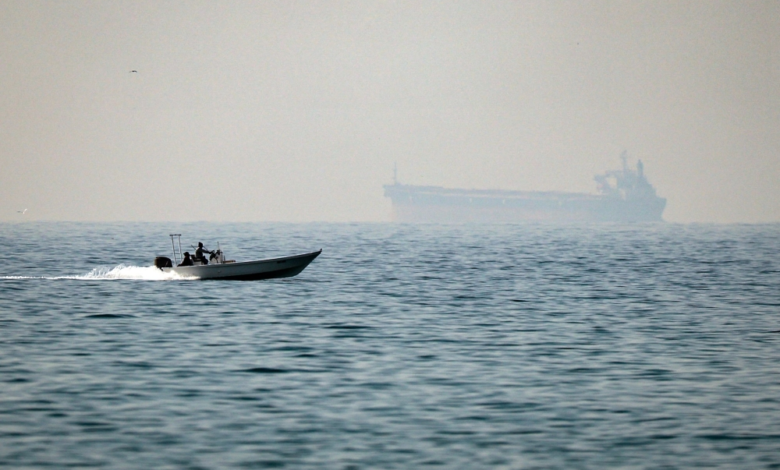
First oil tanker to cross the Strait of Hormuz with active tracking since the start of the war

A significant shift in maritime navigation
In a significant development reflecting the dynamics of maritime navigation amid current regional tensions, the first non-Iranian oil tanker transited the strategic Strait of Hormuz with its Automatic Identification System (AIS) active for the first time since the outbreak of the latest war in the Middle East. This event, recorded on February 28, highlights the subtle shifts in global trade and energy security in one of the world's most sensitive regions.
Details of the crossing of the tanker “Karachi”
According to official data from MarineTraffic, a global maritime traffic monitoring service, the medium-sized Aframax tanker Karachi successfully transited the Strait of Hormuz. The 237-meter-long, Pakistani-flagged vessel was carrying a cargo of Das crude oil from Abu Dhabi. Its heavy cargo was confirmed by its 11.5-meter draft (the submerged portion of the vessel), indicating it was fully loaded.
Historical context and strategic importance of the Strait of Hormuz
To understand the profound dimensions of this event, one must consider the geopolitical and economic importance of the Strait of Hormuz. This strait is the world's most vital waterway for oil trade, connecting the Persian Gulf and the Gulf of Oman to the Arabian Sea and the Indian Ocean. Historically, approximately 20% to 30% of the world's crude oil consumption has passed through this narrow waterway. Consequently, any threat to or alteration in shipping patterns there has immediate repercussions for global energy markets, impacting price stability and international supply chains.
The impact of war and the growth of the "shadow fleet"
Since the escalation of tensions and the outbreak of war in the Middle East, maritime traffic in the region has witnessed a sharp decline in the movement of commercial vessels that rely on standard tracking systems. Many ships have resorted to turning off their tracking devices to avoid detection and targeting. In this context, the Marine Traffic Observatory noted that the passage of the tanker Karachi comes after weeks of a significant decrease in traffic, raising speculation about the possibility of undisclosed understandings or negotiations to ensure the safe passage of some vital shipments.
On the other hand, data from Lloyd's List Intelligence, a maritime data company, revealed that only 77 ships have transited the Strait of Hormuz since the start of the war until last Friday. Interestingly, the vast majority of these ships belong to what is known as the "shadow fleet," vessels that typically operate outside the framework of established global insurance and tracking systems, further complicating the maritime landscape.
Current status of the tanker
Currently, the tanker is proceeding safely; it entered Iranian waters on Sunday and is now sailing in the Gulf of Oman at a speed of 9.6 knots, having successfully transited the Strait of Hormuz with its automatic tracking system activated. The international community and global markets are watching to see if this transit marks the beginning of a return to confidence in the region's shipping lanes, or if it is merely an exception imposed by specific circumstances.