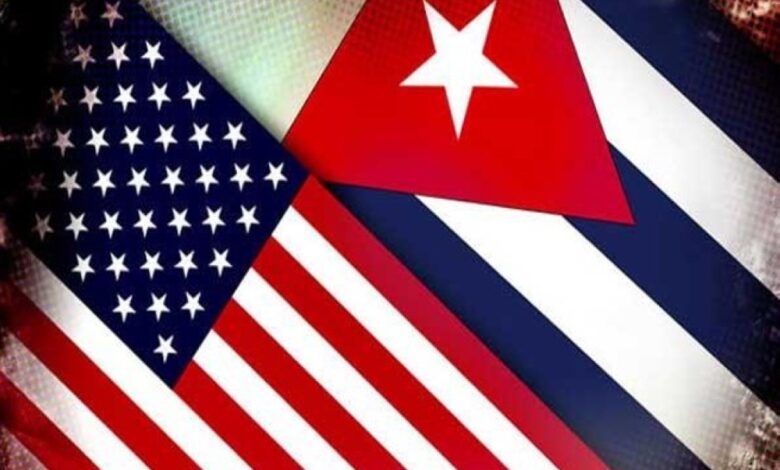
The Cuban president responds to Trump's threats: No one dictates to us what we do

In a new escalation of the war of words between Havana and Washington, Cuban President Miguel Diaz-Canel a strongly worded message in response to recent statements by US President-elect Donald Trump, stressing his country's commitment to its national sovereignty and its categorical rejection of any external dictates.
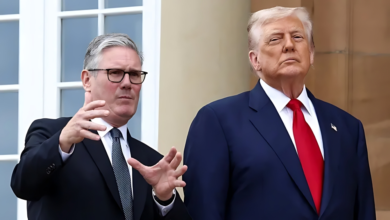
The Cuban president's remarks came on Sunday via his official X account, where he emphasized that Cuba is a "free and independent nation" and that its national decisions are not up for negotiation. Díaz-Canel stated unequivocally, "No one dictates to us what to do," in a direct reference to the pressure and threats recently made by Trump regarding the need to reach an agreement on US terms.
Context of historical tension between the two countries
These statements were not spontaneous, but rather part of a long historical conflict spanning more than six decades. In his response, the Cuban president pointed out that his country "is not the aggressor, but rather the victim of continuous aggression from the United States for 66 years," referring to the economic, commercial, and financial embargo imposed by Washington on the island since the early 1960s following the success of the Cuban Revolution.
Diaz-Canel added, in a clearly defiant tone, that Cuba "is not threatening anyone, but is preparing and ready to defend the homeland to the last drop of blood," reflecting the Cuban defensive doctrine that Havana has long promoted in the face of what it describes as "American imperialism.".
Maximum pressure policy and its impact
These statements take on particular significance given expectations of a return to the "maximum pressure" policy with Trump's return to the political scene. During his first term, Trump reversed most of the rapprochement steps taken by his predecessor, Barack Obama, and imposed more than 240 additional sanctions on Cuba, including the activation of Title III of the Helms-Burton Act, which severely restricts foreign investment in the island.
Trump had previously urged the Cuban leadership to "reach a deal before it's too late," language observers see as part of his strategy of using economic pressure to extract political concessions. Cuba is currently experiencing one of its worst economic crises, suffering from severe shortages of fuel and food and frequent power outages—a situation the Cuban government attributes primarily to tightened US sanctions, while Washington blames it on mismanagement and a lack of democracy.
Regional and international dimensions
Analysts believe this dispute transcends bilateral relations, impacting the geopolitical landscape of Latin America. Cuba's resilience is seen as a symbol of the Latin American left, and any escalation by the United States could push Havana to strengthen its strategic alliances with international powers that rival the US, such as Russia and China, both of which have recently increased their presence in the region.
While the international community awaits the shape of the next US foreign policy, Havana, through its president's statements, confirms that it is prepared to bear the economic consequences in exchange for maintaining its political independence, which portends a new phase of stagnation and tension in the Caribbean region.