Ministry of Tourism: 890 violations in Makkah and Madinah hotels during Ramadan

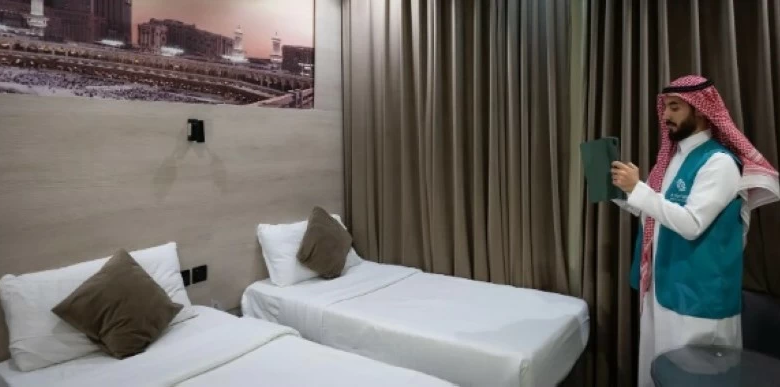
As part of its ongoing efforts to enhance the quality of services provided to pilgrims, the Saudi Ministry of Tourism has intensified its monitoring and inspection tours of hospitality facilities in the holy cities of Mecca and Medina, coinciding with the peak Umrah season during the holy month of Ramadan. These measures are part of a comprehensive strategy aimed at ensuring that establishments adhere to approved international and local standards.
Context of the event and the importance of timing
The holy month of Ramadan witnesses a massive influx of pilgrims and visitors from within the Kingdom and abroad, placing the hospitality and accommodation sector under significant operational pressure. In line with the objectives of Vision 2030 and the "Serving the Guests of God" program, relevant authorities prioritize the safety and comfort of visitors. These inspection tours are a cornerstone in ensuring that operational pressure does not justify any decline in cleanliness or service quality, as the Kingdom strives to solidify its position as a leading religious and tourist destination offering exceptional services befitting the sanctity of the place and time.
Statistics on inspection tours in Mecca and Medina
Official statistics released by the Ministry revealed that inspection teams conducted 1,592 visits during the first half of Ramadan. Efforts were concentrated in Mecca, where 1,166 visits were carried out, resulting in the detection of 762 various violations. In contrast, Medina saw 426 visits, during which 128 violations were recorded, bringing the total number of violations observed in the two holy cities to 890.
The educational and preventive role
The ministry's efforts were not limited to penalties alone; they were accompanied by a large-scale awareness campaign. Field teams conducted 887 awareness visits in Mecca and 367 similar visits in Medina. These visits aimed to educate those in charge of hospitality facilities, including hotels and serviced apartments, on the importance of adhering to quality standards and licensing requirements, reflecting the ministry's approach of strengthening partnerships with the private sector to improve services before resorting to penalties.
The most prominent violations and their impact on the tourist experience
The ministry explained that the violations observed centered around several key aspects, most notably poor hygiene in some facilities, non-compliance with ministerial decisions and instructions, and failure to provide the ministry with required data or complete employee information. The ministry emphasizes that these standards are not merely routine procedures, but rather a safeguard that ensures the health and safety of pilgrims and contributes to enriching their spiritual experience without any disruptions.
In closing, the Ministry of Tourism reiterated its call to all visitors and beneficiaries to participate in improving services by contacting the Unified Tourism Center (930) to report any comments or submit inquiries, stressing that the beneficiary’s voice is the true indicator for measuring the quality of performance.