Transitional Council cells and the challenges facing the Zindani government: Details of the Yemeni crisis

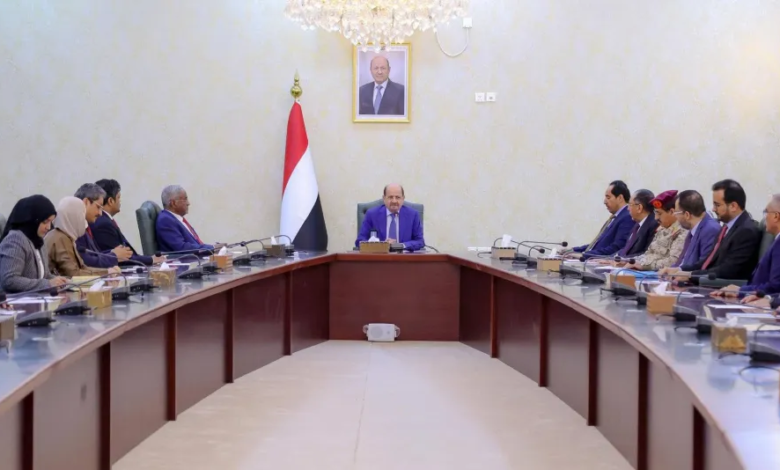
The political and security landscape in Yemen is witnessing escalating tensions, as what are described as "cells" affiliated with factions of the Southern Transitional Council have resurfaced, testing the patience of the legitimate government and the diplomatic efforts led by Foreign Minister and Minister of Expatriate Affairs, Dr. Shaya al-Zindani, within the framework of the Presidential Leadership Council. These developments come at a highly sensitive time, as the government strives to unify the internal ranks and confront the worsening economic and security challenges.
General context and background of the conflict
To understand the nature of this tension, one must consider the recent historical context of the Riyadh Agreement and the consultations sponsored by the Gulf Cooperation Council. The primary objective of these agreements was to integrate military and security formations under the umbrella of the Ministries of Defense and Interior, and to end the fragmentation in the liberated governorates. However, the continued existence of armed formations or "cells" operating outside the framework of unified command poses a significant obstacle to restoring the state's authority and creates a duality that hinders government performance in the interim capital, Aden.
Security challenges and testing the government's patience
Field reports indicate that the actions of certain elements affiliated with the transitional movement pose a direct challenge to state authority, placing the government and the Ministry of Foreign Affairs, led by al-Zindani, in a delicate position before the international community. While Yemeni diplomacy seeks to garner international support to bolster economic and political stability, these security lapses send negative signals that could affect the flow of international aid and grants. The term "testing patience" accurately reflects the restraint exercised by the government to avoid being drawn into peripheral conflicts that could serve other parties hostile to the legitimate government.
Importance and expected impact
The importance of this event is not limited to local affairs only, but extends to regional and international dimensions:
- Locally: The continuation of these tensions exacerbates the deterioration of the national currency and the lack of basic services, as economic stability requires a unified and secure security environment.
- Regionally: The Arab coalition led by the Kingdom of Saudi Arabia is following these developments with concern, as the stability of the liberated governorates is considered a fundamental pillar of regional security and securing the shipping lanes in the Red Sea and Bab al-Mandab.
- Internationally: These disturbances could complicate the UN envoy's efforts to reach a roadmap for comprehensive peace, as the international community requires a strong and unified government partner capable of fulfilling its commitments.
In conclusion, the bet remains on the ability of the government and members of the Presidential Leadership Council to contain these cells and enforce the rule of law, in order to ensure progress in the path of restoring the state and alleviating the humanitarian suffering of the Yemeni people.