The Trump administration is threatening Jerome Powell with criminal charges: the Federal Reserve crisis

In a dramatic development that threatens to send shockwaves through the global financial world, Federal Reserve Chairman Jerome Powell revealed that he has been subjected to unprecedented pressure from the Trump administration, including the threat of criminal charges against him personally. This escalation marks a dangerous turning point in the historically strained relationship between the White House and the institution responsible for monetary policy in the world's largest economy.
Details of the threat and the stated pretext
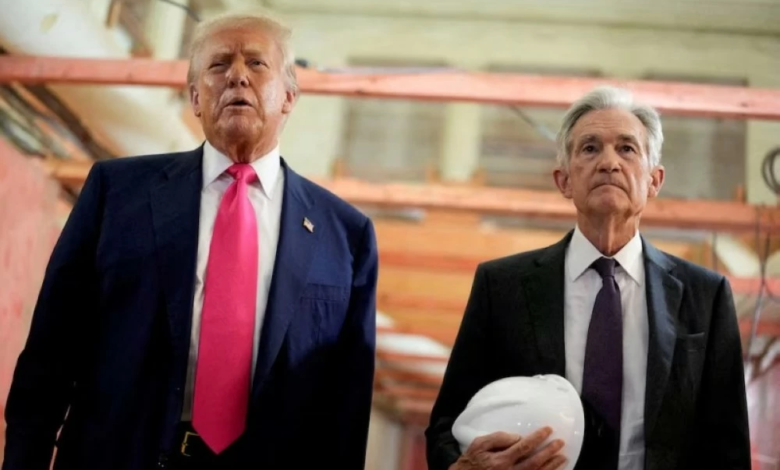
Powell confirmed that the Federal Reserve had received formal subpoenas from a grand jury of the Department of Justice. These actions are ostensibly based on testimony Powell gave before the Senate Banking Committee last June, which discussed alleged overspending on the $2.5 billion renovation and expansion project for the Fed's headquarters in Washington.
In a rare, strongly worded video statement, Powell refuted these accusations, calling them a transparent pretext. He explained, "This new threat has nothing to do with my testimony, with building renovations, or with Congress's oversight role. The real objective is to force the Federal Reserve to cut interest rates rapidly and drastically in line with the president's political desires, not based on economic data.".
Historical background: Federal independence under scrutiny
This incident is particularly serious because it strikes at a fundamental pillar of the global financial system: the independence of central banks. Historically, the Federal Reserve was designed to be insulated from short-term political pressures, ensuring its ability to make difficult decisions (such as raising interest rates to curb inflation) that may be politically unpopular but are essential for the long-term health of the economy.
Although previous US presidents, such as Richard Nixon and Lyndon Johnson, exerted verbal pressure on Federal Reserve presidents in previous eras, the threat of using “criminal law” as a pressure tool is an unprecedented historical precedent in the United States, which economic historian Peter Conti-Brown described as “a low point in the history of US central banking.”.
Potential political and economic repercussions
The political response to this move was swift. Republican Senator Thom Tillis warned that politicizing the Justice Department undermines the credibility of American institutions, vowing to block any nominees Trump puts forward for the Federal Reserve Board until this legal crisis is resolved. These complications come at a critical time, as Powell's term as Fed Chair ends in May 2026, while he is eligible to remain on the Board of Governors until 2028, presenting the Trump administration with a legal and administrative dilemma.
Economically, the news immediately cast a negative shadow over the markets, with US stock futures falling and the dollar weakening. Experts fear that the continuation of this dispute could undermine international investor confidence in the stability of US monetary policy, potentially leading to sharp fluctuations in global markets and higher borrowing costs.
For his part, President Trump denied prior knowledge of the Justice Department's actions, merely directing scathing criticism at Powell's administrative performance, saying: "I don't know anything about the matter, but he is certainly not good at running the Federal Reserve, nor at building structures.".