
New US escalation against allies
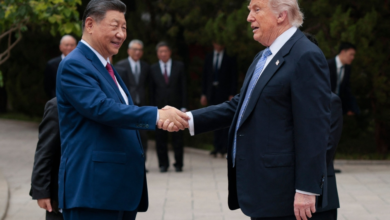
US President Donald Trump launched a scathing attack on NATO member states, accusing them of abandoning Washington and failing to provide sufficient military and logistical support during tensions with Iran. In a further escalation reflecting his unconventional foreign policy, Trump revived the long-standing controversy surrounding his desire to acquire Greenland, coinciding with the upcoming visit of NATO Secretary General Mark Rutte to Washington, D.C.
Background to the tensions between Trump and NATO regarding Iran
Trump's remarks come against a backdrop of historical disagreements between Washington and its European allies. He explicitly stated that NATO countries have not stood by the United States in its confrontations with Tehran, even going so far as to accuse them of obstructing American efforts, citing the refusal of some countries to allow US aircraft to use their airfields. This disagreement stems from earlier periods of tension in the Middle East, where the US administration has consistently demanded a more assertive European stance toward Iran's regional policies, while European countries have often preferred diplomatic approaches, creating a gap in military and political coordination across the Atlantic.
Reviving the Greenland Crisis: Strategic Importance and Danish Rejection
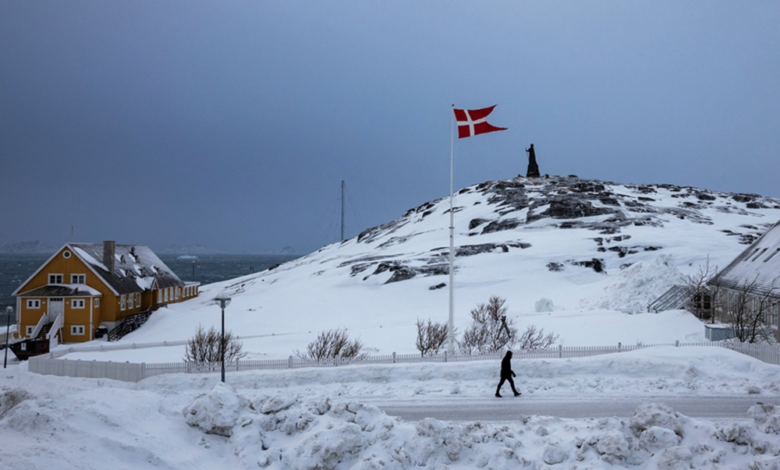
Trump's attacks weren't limited to the Middle East; he also revived the issue of purchasing Greenland, a vast self-governing territory under Danish sovereignty located in the Arctic. The roots of this crisis go back to 2019, when Trump openly expressed the United States' desire to buy the island, a proposal that was met with staunch rejection from the Danish government, which at the time described it as non-negotiable. Greenland's importance stems from its sensitive geopolitical location in the Arctic, an area witnessing increasing competition among major powers, as well as its wealth of natural resources. Trump's recent statements—"We want Greenland, and they don't want to give it to us, and I told them goodbye"—underscore his continued strategic view of this vital region.
NATO is a "paper tiger" and Putin's stance
In downplaying the importance of traditional military alliances, Trump described NATO as a “paper tiger,” a clear indication of his perception of the alliance’s weakness. He asserted that Russian President Vladimir Putin does not fear NATO, but rather the United States and Trump personally, stating, “He’s afraid of us, very afraid. He’s told me that many times.” These remarks reflect Trump’s “America First” philosophy, in which he believes that unilateral American power is more effective than multilateral alliances.
Mark Rutte's visit: An attempt to rebalance the situation
These statements take on added significance as they precede NATO Secretary General Mark Rutte's scheduled visit to Washington. Rutte is set to hold crucial talks with Trump, as well as with key figures in his administration, such as Secretary of State Marco Rubio and Secretary of Defense Pete Hegseth. Rutte faces a complex diplomatic task; for months he has been trying to strike a delicate balance between absorbing Trump's sharp criticism of European allies and maintaining the alliance's cohesion and defending its strategic interests. Despite the attacks, Trump has expressed a willingness to meet with Rutte, describing him as a "fantastic and great man," thus opening the door to negotiations that could reshape the relationship between Washington and NATO.