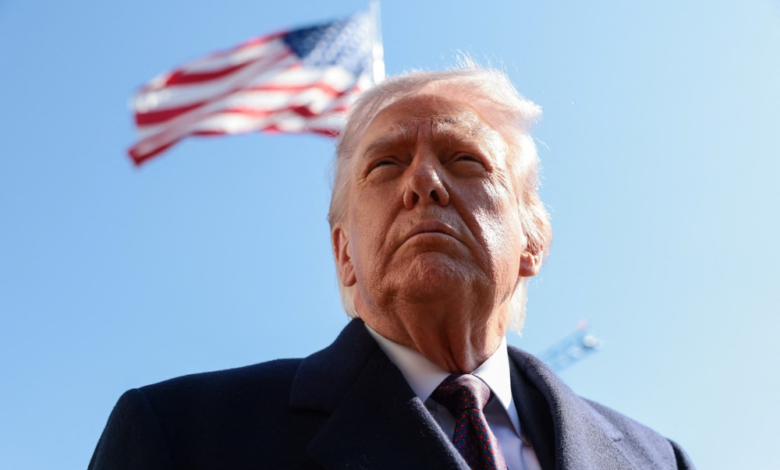
Trump rejects Mojtaba Khamenei and demands the selection of a new Iranian Supreme Leader

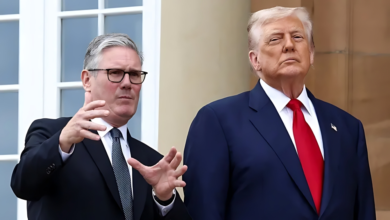
In a surprising statement reflecting a clear desire to reshape the political landscape in the Middle East, former US President and presidential candidate Donald Trump announced on Thursday his intention to directly intervene in the selection of a successor to Iran's Supreme Leader, following reports of Ali Khamenei's death in a joint Israeli-American strike. Speaking to Axios, Trump asserted that he would not accept Mojtaba Khamenei, the late leader's son, assuming power in Tehran.
Details of the American position and rejection of hereditary succession
Trump clarified his firm stance on Iran's future leadership, drawing a parallel with Venezuela, comparing the potential rise of Mojtaba Khamenei to that of Delcy Rodríguez, who succeeded Nicolás Maduro. Trump stated sharply, "Khamenei's son is worthless and unacceptable to me. I must be involved in the selection process to ensure that someone capable of bringing peace to Iran and the region comes to power.".
These statements reinforce Trump’s approach known as “maximum pressure,” as he seeks to block any continuation of the hardline approach that Khamenei’s son might represent, who is seen in Western circles as an extension of his father’s radical policies.
Who is Mojtaba Khamenei?
Mojtaba Khamenei, the Supreme Leader's second son, is a pivotal figure in Tehran's inner circles of power. Although he holds no official elected position, he wields considerable influence within the Islamic Revolutionary Guard Corps (IRGC) and the Supreme Leader's office. His name has been circulating for years as a leading candidate to succeed his father, a prospect that raises Western concerns about the consolidation of a dynastic rule and the potential for complicating international negotiations.
In contrast, the name of Hassan Khomeini, the grandson of the founder of the Islamic Republic, Ruhollah Khomeini, stands out as a possible alternative that is acceptable to reformist movements, which puts the Iranian regime at a crucial crossroads between direct inheritance or a return to the symbolism of the founder.
The mechanism for selecting the Supreme Leader in the Iranian constitution
Constitutionally, the US president has no power to choose the Supreme Leader. Article 107 of the Iranian Constitution stipulates that the task of appointing the Supreme Leader rests exclusively with the Assembly of Experts, an elected religious body composed of 88 mujtahids (qualified jurists). The Supreme Leader possesses absolute powers, including command of the armed forces, appointment of the head of the judiciary, and the formulation of the regime's general policies, making the position of "Guardian Jurist" (Vali-e Faqih) the most important and influential in the structure of the Iranian state.
Current situation: Transitional leadership amid tension
Following the sudden leadership vacuum, a transitional leadership council assumed control of the country's affairs to ensure the continued functioning of state institutions until a permanent leader is elected. This council comprises high-ranking figures representing the three branches of government and sovereign institutions, namely:
- Masoud Pezeshkian: The current Iranian president.
- Gholam Hossein Mohseni Ejei: Head of the Judiciary.
- Ali Reza Arafi: Member of the Guardian Council.
The international community, led by the United States, is watching this transitional phase very closely, as any disruptions in the transition process could lead to security and political repercussions affecting the stability of the Gulf region and the entire Middle East.