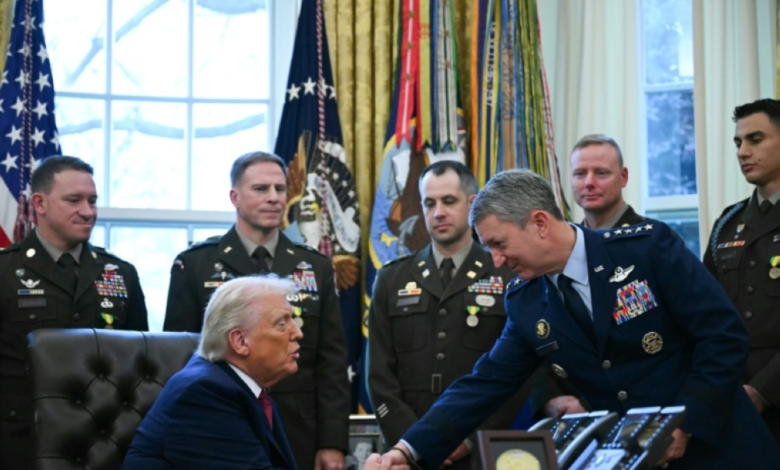
In a new escalation of political and military rhetoric, US President Donald Trump reports that he had received warnings from military leaders about the risks of launching a major operation against Iran. Trump asserted via his "Truth Social" platform that the United States possesses the full capability to inflict a crushing defeat on Tehran in any potential confrontation, describing reports of the Chairman of the Joint Chiefs of Staff opposing military action as "100 percent false."
The context of the historical tension between Washington and Tehran
Trump’s recent statements cannot be separated from the complex historical context of US-Iranian relations, which have been characterized by decades of hostility. Since Washington’s withdrawal from the nuclear agreement and the imposition of its “maximum pressure” policy, the region has witnessed escalating tensions, including skirmishes in the Gulf and proxy attacks. Successive US administrations view Iran’s nuclear program and Tehran’s expanding regional influence as a direct threat to US interests and those of its allies in the Middle East, keeping the option of military confrontation ever-present, despite its significant risks.
Trump: General Kaine knows only victory
In response to reports in American media outlets such as The Washington Post and The Wall Street Journal regarding General Dan Cain's warnings of a "protracted conflict" and a drain on munitions, Trump strongly defended the general, stating that military leaders follow orders and strive for victory. Trump wrote, "General Cain, like all of us, does not want war, but if a decision is made to take action against Iran, in his opinion, it is something that can be easily won." This denial comes at a sensitive time as some within the US administration attempt to balance military deterrence with diplomatic solutions.
Conflicting reports and Pentagon concerns
Despite the president's denials, press reports quoted Pentagon officials expressing serious concerns about the repercussions of any military strike. These concerns centered on Iran's ability to retaliate asymmetrically through its proxies in the region, targeting American bases, and the potential impact on shipping in the Strait of Hormuz. The reports indicated that the military anxiety stemmed from the possibility of being drawn into an open-ended war of attrition that could divert American attention from other geopolitical challenges around the world.
Potential regional and international repercussions
Any threat of military confrontation between the United States and Iran carries serious repercussions that extend far beyond the two countries involved. Regionally, the Gulf states could find themselves at the center of the storm, threatening global energy security and market stability. Internationally, the conflict could lead to a sharp rise in oil prices, exacerbating the global economic crisis. Observers believe that Trump's statements may be part of a "madman" strategy to pressure Tehran back to the negotiating table on American terms, a point he alluded to when he said, "I'd rather make a deal, but if we don't make a deal, that's going to be a very bad day for that country.".
Between escalation and diplomacy
Behind the scenes, reports indicate a faction advocating for de-escalation, led by Special Envoy Steve Wittkopf and Jared Kushner, who are urging the president to give diplomacy a chance before resorting to military action. This internal division, coupled with the media clashes, reflects the uncertainty surrounding the future of the Iranian issue, where the final decision rests with the president, who has clearly stated: "I am the one who makes the decision.".