Trump's messages and the Grand Ethiopian Renaissance Dam: Will they break the deadlock in negotiations?

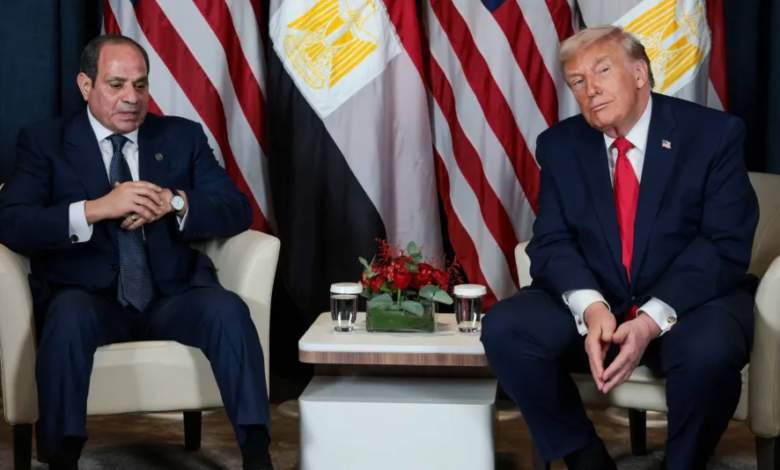
Recent messages and statements attributed to former US President and Republican presidential candidate Donald Trump, which showed clear support for the Egyptian position on the Nile water issue, have raised numerous questions about whether this political momentum could break the long-standing deadlock in the negotiations over the Grand Ethiopian Renaissance Dam (GERD). These developments come at a time when the negotiation process between the three countries (Egypt, Sudan, and Ethiopia) is almost at a standstill, amid growing concerns about the continuation of unilateral actions.
Historical background: The American role in the dam crisis
Trump's involvement in the Grand Ethiopian Renaissance Dam (GERD) issue is not new. During his presidency, specifically in 2019 and 2020, Washington hosted intensive rounds of negotiations sponsored by the US Treasury Department and the World Bank. These efforts resulted in a draft comprehensive agreement for filling and operating the dam, which Egypt initialed, while Ethiopia declined to sign at the last minute. Observers still recall Trump's strong statements at the time, in which he warned that the situation could escalate beyond control, emphasizing the danger of jeopardizing Egypt's water share.
The importance of the Nile: an existential issue for Egypt
These messages gain their importance from the very nature of the crisis itself. For Egypt, the Grand Ethiopian Renaissance Dam (GERD) issue is not merely a developmental or political dispute, but an existential one linked to national and water security. Egypt relies on the Nile River for over 97% of its water needs for drinking, agriculture, and industry. Given the water scarcity plaguing the region, any reduction in the flow of the Blue Nile without a legally binding agreement regulating the filling and operation of the dam during periods of drought and prolonged dry spells poses a direct threat to the lives of millions of Egyptians.
The expected impact of international intervention
Observers believe that a renewed American momentum, whether through Trump's statements or broader international pressure, could be the decisive factor in breaking the deadlock. Past years have demonstrated that mediation under the auspices of the African Union alone has failed to bridge the gap between the divergent positions. Addis Ababa insists on its right to development and electricity generation without restrictions, while Cairo and Khartoum demand a legally binding agreement that guarantees no harm to downstream countries. Therefore, any strong signals of support from Washington could reshape the landscape and encourage the parties to return to the negotiating table more seriously, seeking a solution that serves everyone's interests and spares the region unnecessary tensions.