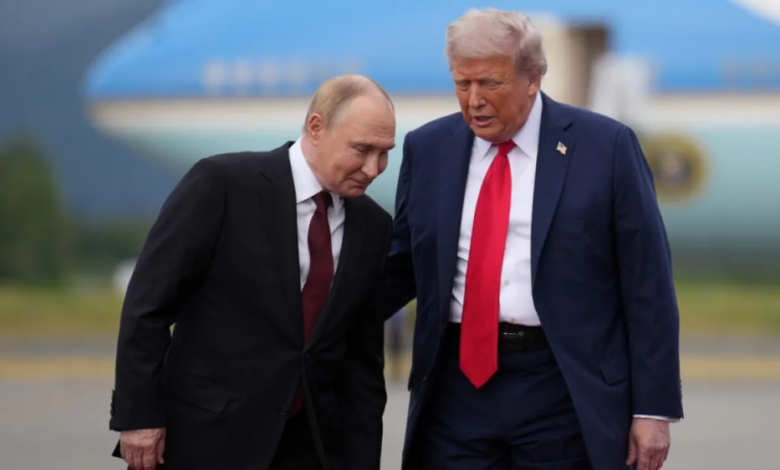
Trump, Putin, and the Peace Council: Details of the new alliance to replace the United Nations

In a move that could represent a radical shift in the structure of the international system established since the end of World War II, US President Donald Trump announced that his Russian counterpart Vladimir Putin had accepted his invitation to join what he called the “Peace Council,” a new international entity that Trump intends to establish as a rival or alternative to the United Nations, which he has long criticized harshly.
Details of the invitation and the Russian response
President Trump asserted that the initiative aims to unite the world's major powers within a new framework more effective than existing organizations. In contrast, the Kremlin approached the proposal with seriousness and diplomatic caution. Russian President Vladimir Putin stated that he had instructed the Russian Foreign Ministry to study the American proposal very carefully. During a high-level government meeting, Putin said, "I have tasked the Russian Foreign Ministry with studying the documents we have received and consulting with our strategic partners on this matter." He emphasized that an official response would only be issued after these consultations were completed, indicating Moscow's desire to coordinate positions with its allies before taking such a significant step.
Context of the initiative: Ongoing criticism of the United Nations
This initiative did not emerge in a vacuum; rather, it is an extension of Trump’s “America First” policy, which is characterized by skepticism toward the effectiveness of traditional international organizations. Trump has long criticized the United Nations, describing it as “a club where people get together to talk and have a good time” without achieving tangible results, in addition to his persistent criticism of the size of the American financial contribution compared to other countries. Trump believes that international bureaucracy hinders conflict resolution and that direct alliances between major powers may be more effective in establishing stability.
Geopolitical dimensions and their impact on the global system
The establishment of the “Peace Council” carries profound implications on the international stage, and its expected effects can be summarized in the following points:
- Challenging the current world order: This council represents a direct threat to the legitimacy of the United Nations and the UN Security Council, which are often paralyzed by the use of the veto.
- Promoting a multipolar world: Russia’s initial acceptance of studying the idea reflects Moscow’s desire to promote a multipolar world order that breaks the traditional Western hegemony represented by current institutions.
- Redrawing alliances: Putin’s reference to “strategic partners” suggests that Russia’s accession may be contingent on the participation of other powers such as China, potentially turning the council into a platform for great powers to manage the world away from Western institutional liberalism.
The success of this initiative depends largely on the response of other international powers, and whether this council will provide practical solutions to the escalating global crises, or whether it will turn into a new arena for diplomatic conflict between East and West.