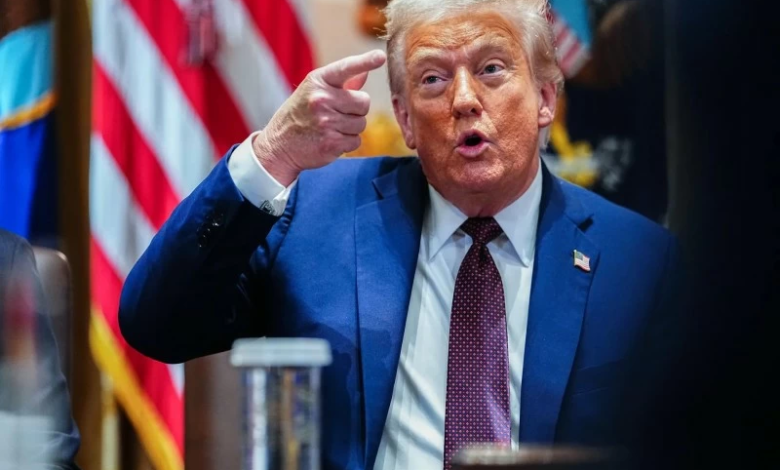
In a new escalation that threatens global economic tensions, US President Donald Trump announced on Saturday an immediate increase in global tariffs from 10% to 15%, a preemptive move in response to the US Supreme Court's ruling that overturned previous tariffs. This new decision is based on various legal provisions granting the president temporary powers, opening the door to a new phase of uncertainty in international markets.
Details of the decision and legal document
President Trump explained via his Truth Social platform that the new tariff increase would take effect immediately, noting that the current rate of 15% is the maximum legally permitted without congressional approval at this time. This move is based on Section 122 of the Trade Act of 1974 , which grants the president the authority to impose temporary tariffs for a period not exceeding 150 days. The stated objective of this measure is to address a "serious and significant balance of payments deficit" and protect the value of the US dollar from fluctuations in global markets.
Power struggle: The White House vs. the Supreme Court
This decision comes as a direct and angry response to the Supreme Court's February 20 ruling, which found that the president had exceeded his constitutional authority by imposing tariffs under the International Emergency Economic Powers Act. The court described the imposition of tariffs on imports as the exclusive prerogative of Congress. However, Trump, who called the court's decision "anti-American," quickly resorted to an alternative legislative tool (the 1974 law) to circumvent the ruling, asserting that other countries had "robbed" the United States for decades and that his policies were aimed at restoring balance.
Potential economic repercussions locally and globally
This decision is raising widespread concerns among economists and policymakers worldwide. Economically, the American consumer typically bears the cost of tariffs through higher prices for imported goods, potentially triggering a new wave of inflation that erodes citizens' purchasing power. Internationally, major economic powers such as China and the European Union are not expected to remain passive; analysts predict these countries will retaliate by imposing similar tariffs on American exports, which could further derail fragile global economic growth and disrupt supply chains.
The historical context of protectionist policies
This approach is not new for President Trump. During his first term (2017-2021), he adopted an "America First" policy focused on trade protectionism and withdrawing from some international agreements. In his second term, which began in January 2025, Trump appears determined to pursue this approach even more rigorously, aiming to reduce the trade deficit and boost domestic manufacturing, even at the expense of traditional diplomatic relations or the stability of the existing global trading system.