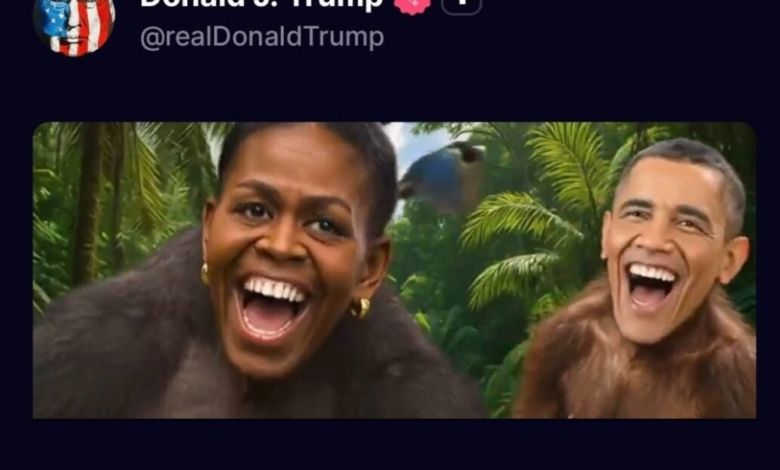

في تصعيد جديد للجدل الدائر حول منشوراته على وسائل التواصل الاجتماعي، رفض الرئيس الأمريكي السابق والمرشح الجمهوري دونالد ترامب تقديم اعتذار رسمي عن مقطع فيديو نُشر على حسابه في منصة "تروث سوشيال"، والذي صوّر سلفه باراك أوباما وزوجته ميشيل بطريقة مسيئة وعنصرية.
وخلال حديثه للصحفيين على متن طائرة "إير فورس وان" مساء الجمعة، تمسك ترامب بموقفه الرافض لتحمل المسؤولية الشخصية عن الواقعة. وعند سؤاله عما إذا كان ينوي الاعتذار عن المنشور الذي أثار موجة استنكار واسعة، أجاب باقتضاب: "لم أرتكب أي خطأ". ومع ذلك، عند الضغط عليه بالسؤال حول ما إذا كان يدين المشاهد العنصرية التي تضمنها الفيديو، رد قائلاً: "بالطبع"، في محاولة للفصل بين إدانة المحتوى وبين مسؤوليته عن نشره.
تفاصيل الواقعة وتبريرات البيت الأبيض
يعود أصل الأزمة إلى نشر مقطع فيديو ليل الخميس على حساب ترامب الرسمي، يُظهر الرئيس الأسبق أوباما وقرينته على هيئة "قردين"، وهو تشبيه يحمل دلالات عنصرية تاريخية عميقة في الثقافة الأمريكية. وقد سارع البيت الأبيض في البداية إلى وصف ردود الفعل الغاضبة بأنها "غضب مصطنع"، قبل أن يتراجع لاحقاً ويحمل المسؤولية لأحد الموظفين، مشيراً إلى أن النشر تم عن طريق الخطأ ودون علم الرئيس.
السياق التاريخي والتوترات السياسية
لا يمكن فصل هذه الحادثة عن التاريخ الطويل من التوترات بين ترامب وأوباما. فقد كان ترامب لسنوات الوجه الأبرز لما عُرف بحركة "بيرثر" (Birther movement)، التي شككت زوراً في مكان ولادة أوباما وأهليته للرئاسة. وتأتي هذه الواقعة لتعيد للأذهان استخدام الصور النمطية العنصرية التي طالما عانى منها المجتمع الأمريكي، حيث يُعد تشبيه ذوي البشرة السمراء بالقرود أحد أقدم وأبشع أشكال التعبير العنصري التي تهدف إلى نزع الصفة الإنسانية عنهم.
التأثير السياسي وردود الفعل
أثار الفيديو انتقادات حادة تجاوزت الحزب الديمقراطي لتشمل أصواتاً من الحزب الجمهوري، الذين رأوا في مثل هذه التصرفات تشويشاً على الرسائل السياسية للحزب وإضراراً بصورته العامة. ويشير محللون سياسيون إلى أن تكرار مثل هذه الحوادث يعمق حالة الاستقطاب الحاد في الشارع الأمريكي، ويطرح تساؤلات جدية حول آلية إدارة حسابات التواصل الاجتماعي لأبرز الشخصيات السياسية في البلاد. كما يسلط الضوء على التحديات التي تواجهها الحملات الانتخابية في ضبط الخطاب العام في ظل فضاء رقمي مفتوح ومضطرب.