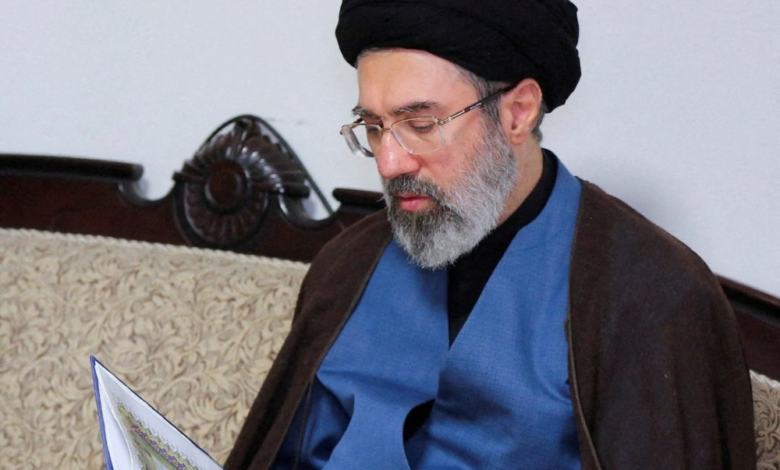
Trump attacks the appointment of Mojtaba Khamenei as Supreme Leader of Iran

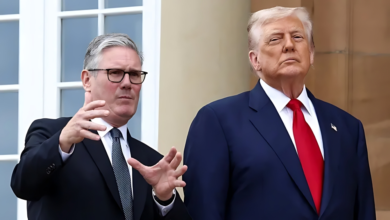
US President Donald Trump expressed his strong displeasure with recent political developments in Tehran, stating that he was not pleased with the election of Mojtaba Khamenei as Supreme Leader of the Islamic Republic of Iran. These remarks come amid escalating military tensions, as Mojtaba assumed the position following the death of his father, who was killed at the outset of the joint US-Israeli attack on Iranian territory.
Trump's stance on the new Iranian leadership
The New York Post quoted Trump as saying, in response to a question about his next steps after the inauguration of Khamenei's son: "I'm not going to tell you, but I'm not happy." The US president added, warningly: "I don't know if it will last. I think they made a terrible mistake." Trump didn't stop there; he escalated his rhetoric, threatening that any new Supreme Leader "wouldn't last long" in power without his approval. This stance reflects the continuation of the US administration's hardline approach toward the Iranian regime, previously manifested in the "maximum pressure" campaign and the withdrawal from the nuclear agreement in 2018.
Who is Mojtaba Khamenei? And why is he a cause for concern?
Mojtaba Khamenei, 56, is one of the most influential and enigmatic figures in Iranian political circles. Historically, he has played a pivotal role behind the scenes and is known for his close ties to the hardline conservative faction. His primary power stems from his close relationships with the Islamic Revolutionary Guard Corps ( IRGC) and the Basij militia, particularly his prominent role in suppressing the Green Movement protests of 2009. Upon his selection by the Assembly of Experts, the IRGC quickly pledged its allegiance, affirming its readiness for “complete obedience and sacrifice.” This was followed by the armed forces and the police, reflecting the military establishment’s tightening grip on the levers of power at this critical juncture.
Historical context and repercussions of the conflict
These developments come against a backdrop of historically charged animosity between Washington and Tehran, which previously reached its peak with the assassination of Quds Force commander Qassem Soleimani in 2020. A power transition in Iran amidst a US-Israeli military offensive would place the entire Middle East on a knife's edge. The anticipated impact of this event extends beyond Iran's borders, affecting maritime security in the Arabian Gulf, global energy markets, and the future of the "axis of resistance" supported by Tehran in countries such as Lebanon, Syria, Iraq, and Yemen.
"A short-term trip": Trump's vision for the course of the war
In a related development concerning military operations, Trump described the ongoing war against Iran as a “short trip,” despite acknowledging that a complete victory over Tehran had not yet been achieved “sufficiently.” During a gathering of Republican members of Congress held at his golf club in Doral, Florida, Trump’s remarks further clouded the timeline of the conflict. In an interview with CNN, he said the war was “almost over.” He explained to his supporters, “We embarked on a little trip because we felt we had to do it to take out some people, and I think you’ll see it’s going to be a short trip,” a clear reference to targeting the top leadership of the Iranian regime.