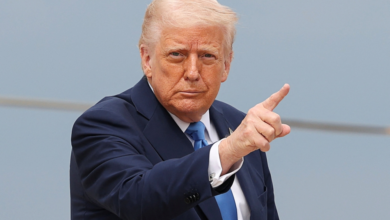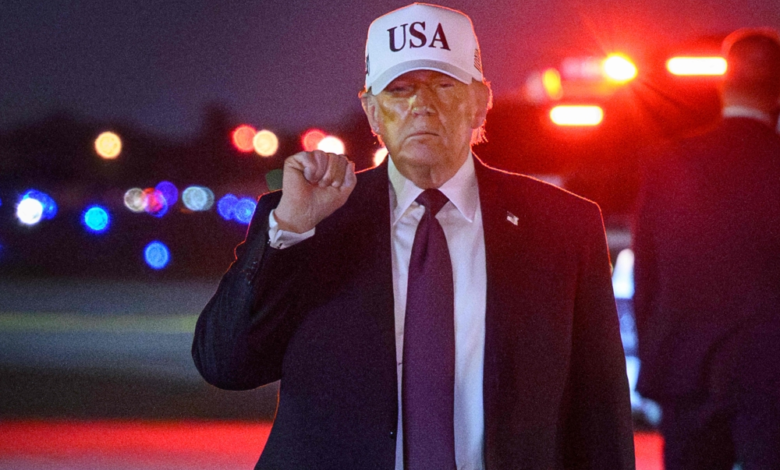

In a new escalation reflecting his hardline foreign policy stance, former US President Donald Trump declared that the United States must “get the job done” in Iran. These remarks, made during a public address in Hebron, Kentucky, underscore his hawkish approach toward Tehran and raise questions about the future of US-Iranian relations.
Details of Trump's statements regarding Iran
In his speech, Trump alluded to the ongoing military operations and tensions, explaining that the United States should not rush to withdraw or retreat before fully achieving its strategic objectives. He stated unequivocally, “We don’t want to leave early. We’ve got to finish the job, right?” Interestingly, this firm declaration came just hours after he hinted that the conflict might be ending soon, justifying this by claiming that “there’s virtually nothing left to hit in the country,” alluding to the significant impact previous pressure and strikes had had on Iranian infrastructure and capabilities.
The historical context of maximum pressure policy
To understand the implications of these statements, it is necessary to return to the historical context of US-Iranian relations during Trump's presidency. Trump adopted a strategy known as "maximum pressure," which began with Washington's unilateral withdrawal from the Iran nuclear deal (the Joint Comprehensive Plan of Action) in 2018. This was followed by the imposition of harsh economic sanctions targeting Iran's oil and banking sectors. Tensions reached a peak in early 2020 with the military operation that killed Quds Force commander Qassem Soleimani, bringing the two countries to the brink of direct military confrontation.
Expected regional and international impacts
Trump's statements have far-reaching implications and effects on several political and economic levels:
At the regional level, such statements are of great concern to Washington's allies in the Middle East. Any escalation or change in the US position toward Iran directly impacts the security of navigation in the Strait of Hormuz, through which a large portion of the world's oil supply passes, as well as the overall stability of the region amid ongoing tensions.
On the international and economic level: Tensions with Iran are closely linked to global energy markets. Threats of "mission accomplished" militarily or politically could lead to fluctuations in oil prices, prompting major powers to closely monitor the situation given its impact on the global economy and energy security.
Internal political dimensions in the United States
From a domestic perspective, these statements are part of a campaign to rally political support. Trump's speeches in states like Kentucky aim to project strength and resolve to his base. Using terms like "getting the job done" reinforces his image as a leader who puts "America First" and is willing to protect American interests abroad by any means necessary.
In conclusion, US-Iranian relations remain one of the most complex issues in international politics. Trump's recent statements confirm that a hardline stance toward Tehran is still strongly present in the political landscape, leaving the door open to multiple scenarios that will be determined by future developments on the ground and in the political arena.