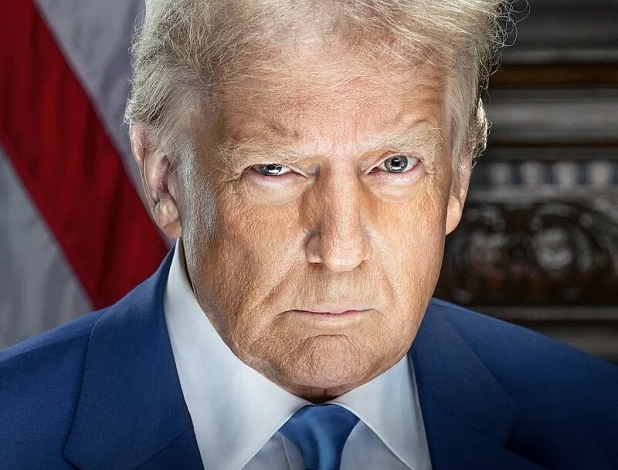
In controversial remarks reflecting the ongoing legal and political battle over presidential powers in the United States, former US President Donald Trump asserted yesterday (Monday) that the US Supreme Court had granted him – as president – far broader powers and influence than expected, through a judicial ruling he described as a “terrible mistake” committed by the country’s highest judicial body.
Details of the Supreme Court decision and Trump's reaction
Trump's remarks came in response to a recent court ruling that invalidated some of the procedural fees (licensing fees) previously imposed by his administration, while preserving the core authority regarding tariffs. Trump posted an analysis of the decision on his social media platform, Truth Social, pointing to a legal anomaly that indirectly worked in his favor.
Trump said, “I can use licenses to do strong things to foreign countries, especially those that have taken advantage of us for decades, but the ruling prevented the collection of license fees, even though all licenses impose fees. Why can’t the United States do that?” He added, explaining what he considers a victory for executive powers, “The court upheld all the other tariffs, which can be used in a much stronger and more effective way than initially intended.”.
Background of the trade conflict and the Trade Expansion Act
To understand the context of this event, one must revisit the economic policies pursued by Trump during his presidency. He relied heavily on the Trade Expansion Act of 1962, specifically Section 232, which grants the president the authority to impose tariffs if imports threaten U.S. national security. The Trump administration used this authority to impose tariffs on steel, aluminum, and numerous other Chinese imports, igniting a global trade war aimed at protecting American industry.
Observers believe that Trump's interpretation of the court's decision means that while the judiciary may have prevented the side "administrative tariffs," it has enshrined the legitimacy of the president's use of tariffs as a tool of political and economic pressure without significant restrictions, which Trump considers "greater leverage" that was not clearly available before.
Geopolitical implications and criticism of China
Trump seized the opportunity to launch a scathing attack on the Supreme Court, calling it "incompetent" and saying it should be ashamed of its mistake. The former president linked the court's decisions to international interests, suggesting that such rulings could benefit America's rivals, particularly China.
In a related matter, Trump addressed the issue of birthright citizenship, warning that the courts might find ways to interpret laws to benefit foreign countries, alluding to concerns about the exploitation of loopholes in American law by foreign powers. This connection reflects Trump's "America First" vision, in which he believes the judicial system must be more stringent in protecting national interests.
The future of US trade policy
Trump concluded his remarks with a clear tone of defiance, emphasizing his intention to use these "expanded" powers if he were to return to office. He said, "Let the court continue to make bad and destructive decisions for the future of our nation, but I have a job to do: make America great again in the coming period.".
This statement indicates that the economic file and the trade war will be a key pillar in Trump’s future agenda, now relying on what he considers an unintended legal mandate from the Supreme Court to impose stricter protectionist policies that will have a greater impact on the global economy.