Trump threatens to invade Iran, and Washington warns its citizens in the Middle East


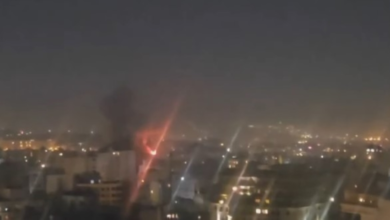
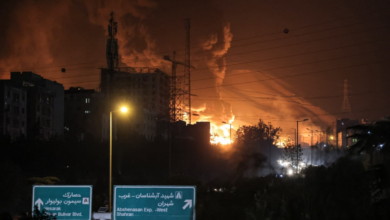
In a rapidly evolving situation in the region, the United States has urgently urged its citizens to leave more than 12 Middle Eastern countries, coinciding with fiery statements by US President Donald Trump hinting at the possibility of a ground military intervention against Tehran. This warning was reported in a breaking news bulletin by Al Arabiya, reflecting the gravity of the current security and political situation.
Trump hints at the ground military option
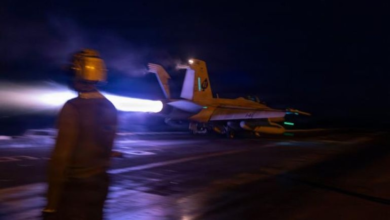
In a press statement, US President Donald Trump declared that his country would not hesitate to send American ground troops into Iranian territory if necessary, emphasizing the combat readiness of US forces. Trump asserted that the US military possesses the capabilities to wage a war that could last more than four or five weeks, indicating that the main wave of US attacks has not yet begun, thus foreshadowing an unprecedented military escalation.
During a ceremony at the White House, the US president described the current situation as "the last and best chance" to deliver a decisive blow to Iran, indicating Washington's growing strategic impatience with Iranian actions in the region.
General context and historical tensions
These threats come against the backdrop of a long history of tension between Washington and Tehran, which has escalated in recent years due to Iran's nuclear program and ballistic missile programs. Successive US administrations have consistently considered Iran's acquisition of nuclear weapons a red line that cannot be crossed. These statements are reminiscent of the "maximum pressure" policy aimed at curbing Iranian influence in the region and ensuring the security of allies.
Justifications for escalation and nuclear fears
The US president justified this dangerous escalation by pointing to Tehran's military arsenal, emphasizing that "an Iranian regime possessing long-range missiles and nuclear weapons would pose an intolerable threat to the Middle East, as well as to the American people." This statement reflects ongoing Western concerns about the development of Iranian missile capabilities, which could reach US bases in the region and threaten international maritime security.
The repercussions of the crisis on the region and the world
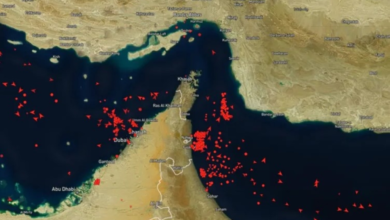
This escalation carries serious repercussions at both the regional and international levels. Economically, global energy markets are directly affected by any threat of war in the Arabian Gulf, as the Strait of Hormuz is a vital artery for oil supplies. Politically, the United States' call for its citizens to leave more than 12 countries indicates concerns that the conflict could spread to other countries in the region, potentially leading to instability that would impact travel, investment, and regional security as a whole.