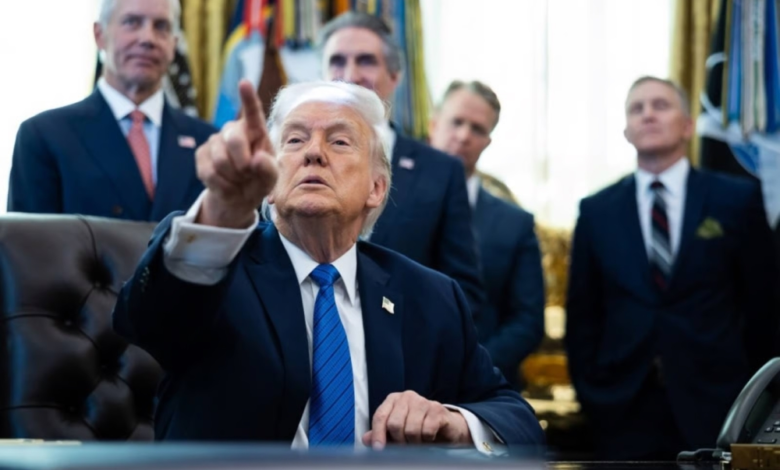
Trump threatens Iran if nuclear negotiations fail: Details of the anticipated meeting

In a significant development in the complex Iranian nuclear issue, US President Donald Trump issued a stern warning to Tehran, asserting that "bad things" would happen if the Islamic Republic failed to reach a new agreement with the United States. This statement coincided with Tehran demonstrating unprecedented diplomatic flexibility, as Iranian President Masoud Pezeshkian instructed officials to begin direct talks with Washington.
Threats of force and cautious diplomacy
Speaking to reporters at the White House, Trump said, “We are talking to them now, we are talking to Iran. If we can reach a solution, that would be great. If we can’t, then very bad things will probably happen.” This statement reflects Trump’s familiar strategy of combining maximum pressure with open negotiations, while Washington maintains the threat of military force as a viable option.
To reinforce these messages, the United States has bolstered its military presence in the Middle East, deploying squadrons of fighter jets and a large naval fleet led by the aircraft carrier USS Abraham Lincoln. This military buildup comes at a sensitive time, following a violent crackdown in Iran against internal protests last month, which resulted in casualties and further isolated the Iranian regime internationally, increasing pressure on it.
Iranian moves towards the table
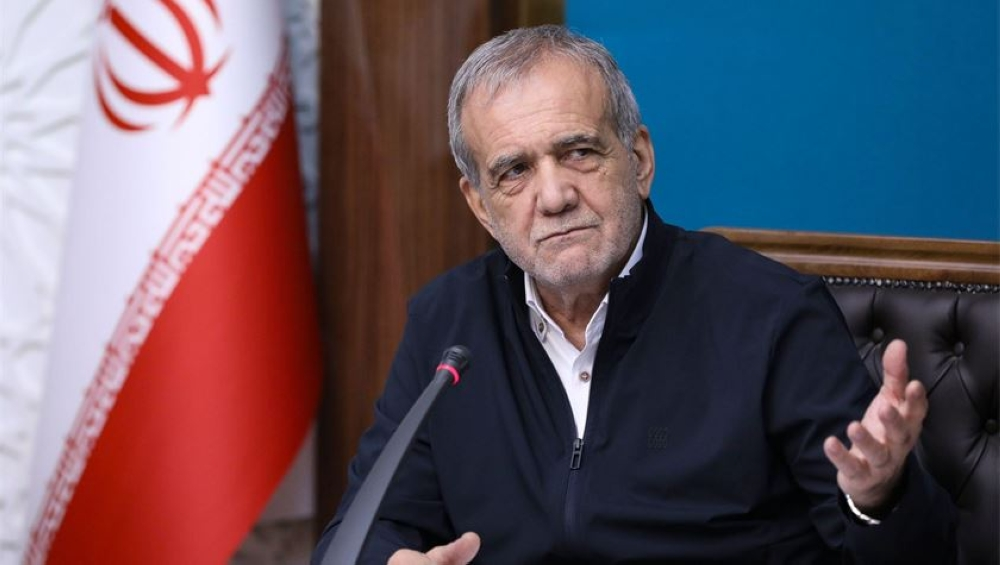
In contrast, an Iranian government source revealed to the Fars News Agency that President Masoud Pezeshkian had ordered the commencement of formal talks with the United States regarding the nuclear issue. Iranian newspapers, including the state-run Iran and the reformist Shargh, confirmed this move, indicating that Tehran seeks to break the current deadlock and alleviate the impact of sanctions.
A highly anticipated meeting in Istanbul
On a practical level, the American news website Axios, citing informed sources, reported that arrangements are underway for a crucial meeting in Istanbul, Turkey, on Friday. The meeting is expected to bring together Iranian Foreign Minister Abbas Araqchi and US envoy Steve Wittkopf to discuss a framework for a potential agreement that addresses US concerns about Tehran's nuclear program in exchange for lifting sanctions.
Context of the conflict and historical background
To understand the depth of these developments, one must go back to the United States' unilateral withdrawal from the Joint Comprehensive Plan of Action (JCPOA) in 2018, a decision made by Trump himself, and the reimposition of crippling economic sanctions as part of the "maximum pressure" campaign. This led to a sharp decline in the Iranian economy and prompted Tehran to accelerate its uranium enrichment to near-military-grade levels.
Observers believe that the return to negotiations now comes within a complex regional equation, as Washington seeks to ensure that Iran does not possess nuclear weapons and to protect the security of its allies in the Gulf and Israel, while Tehran aims to get out of its economic crisis and avoid a possible military strike that could threaten the stability of the regime, especially in light of recent internal tensions.
Expected regional and international impact
The success of these negotiations could lead to de-escalation in the multi-conflict Middle East and pave the way for new security arrangements. However, their failure, as Trump warned, could drag the region into an open-ended military confrontation with dire consequences, directly impacting global energy markets and the stability of navigation in vital waterways.