Trump gives Iran 48 hours to open the Strait of Hormuz or face the destruction of its oil terminals

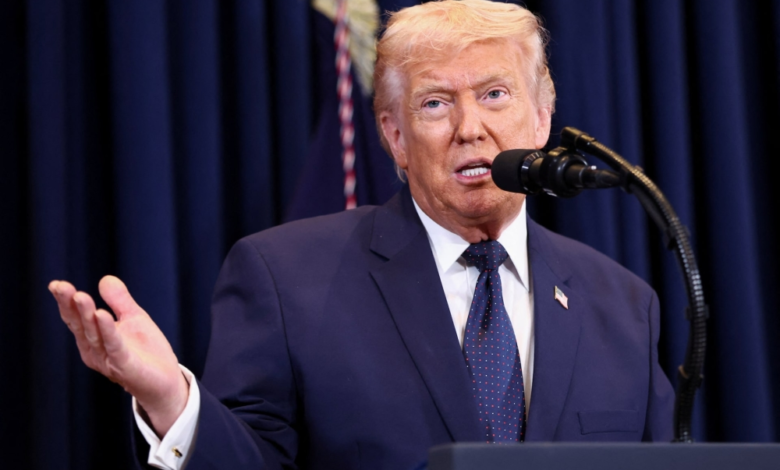
US President Donald Trump announced a five-day postponement of potential military strikes against Iranian power plants, a move that coincided with a strongly worded warning to Tehran. Trump gave the Iranian government a 48-hour deadline to fully reopen Strait of Hormuz to international shipping, threatening severe consequences targeting Iran's energy infrastructure if it failed to comply.
Details of the American threat via Truth Social platform
These statements were made via the US president's account on the social media platform Truth Social, where he wrote unequivocally: "If Iran does not fully open the Strait of Hormuz, without any threat, within 48 hours, the United States will strike and destroy all of its energy facilities, starting with the largest!" This statement reflects a significant escalation in American rhetoric toward Tehran and places the entire region on the brink of an unprecedented military escalation that could reshape the map of alliances and interventions in the Middle East.
The strategic and economic importance of the Strait of Hormuz
To understand the magnitude of this threat, one must consider the geopolitical importance of the Strait of Hormuz. The strait is one of the world's most vital waterways, connecting the Persian Gulf, the Gulf of Oman, and the Arabian Sea. Between 20% and 30% of the world's crude oil consumption, along with enormous quantities of liquefied natural gas, passes through this narrow passage. Any disruption or closure of this strait, whether partial or complete, would paralyze global energy supplies, immediately triggering a dramatic surge in oil prices, which would negatively impact the global economy and exacerbate inflation.
The historical context of tensions between Washington and Tehran
These developments come within a long history of tensions between the United States and Iran. Since Washington withdrew from the Iran nuclear deal and implemented its “maximum pressure” policy, Tehran has used the Strait of Hormuz as a tool for political and economic pressure on the international community. The past few years have witnessed numerous attacks targeting oil tankers and commercial vessels in the region, prompting the United States and its allies to bolster their naval presence to ensure freedom of navigation and secure this vital waterway.
Expected regional and international repercussions
Regionally, this escalation is causing grave concern among neighboring countries that rely almost entirely on the Strait of Hormuz to export their energy resources to Asian and European markets. Internationally, Washington's implementation of its threats to strike Iranian power plants could provoke retaliatory attacks from Tehran or its proxies in the region, risking a wider regional conflict. International actors are currently monitoring the situation closely, amid diplomatic calls for restraint and to avoid sliding into open warfare, which could exact a heavy toll on the global economy and international security.