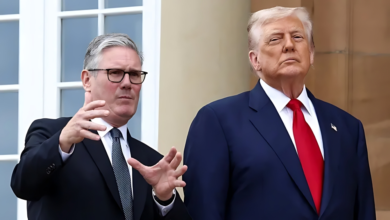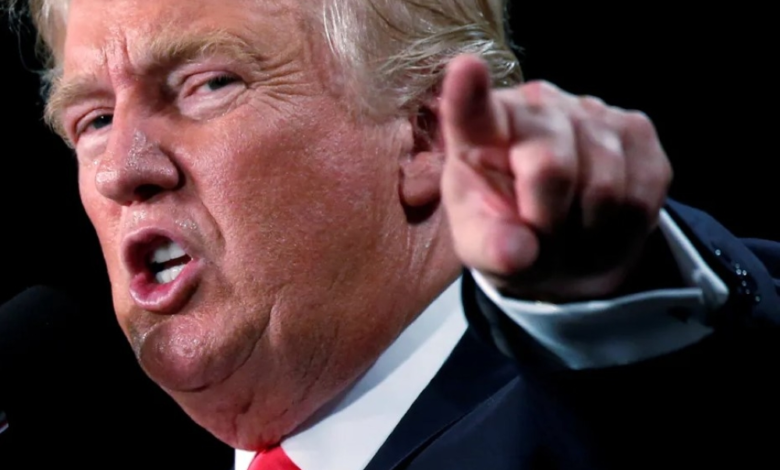

Former US President Donald Trump issued a stern warning to Tehran, threatening unprecedented and serious military consequences should it proceed with laying mines in the Strait of Hormuz. These fiery remarks followed Iranian hints that it would block all oil exports through this vital waterway as long as attacks and military tensions involving the United States and Israel persist in the region.
In further escalation, Trump posted a clear and direct message on his social media platform, Truth Social, asserting that if mines were laid for any reason and not immediately removed, the military repercussions for Iran would be unprecedented. In another post, he warned that any Iranian action aimed at disrupting the flow of oil and shipping in the Strait would be met with devastating American strikes, which he described as 20 times more severe than any previous military action against Tehran.
The strategic and economic importance of the Strait of Hormuz
The Strait of Hormuz is one of the world's most important and sensitive waterways. Connecting the Persian Gulf, the Gulf of Oman, and the Arabian Sea, it is a vital artery for global energy supplies. Reliable statistics indicate that approximately 20% of total global oil consumption, or roughly 20 million barrels per day, passes through this narrow strait. The Gulf Arab states rely almost entirely on this waterway to export their oil and natural gas to Asian and Western markets, making it a strategically critical chokepoint.
The historical context of US-Iranian tensions
Historically, threats to close the Strait of Hormuz are not a recent development, but rather a political and military pressure tactic that Tehran has consistently employed during its crises with the West. The roots of these tensions can be traced back to the "Tanker War" of the 1980s, during the Iran-Iraq War, when commercial vessels were subjected to tit-for-tat attacks. In 2019, the region witnessed a dangerous escalation after several oil tankers were sabotaged, an act for which Washington accused Tehran of being responsible. The United States considers protecting freedom of navigation in the Strait a cornerstone of its foreign policy and national security, maintaining a substantial naval and military presence in the region to ensure the uninterrupted flow of energy supplies.
Expected effects of any military escalation
Any attempt to close the Strait of Hormuz or mine it would have catastrophic consequences on several levels. Internationally, the world would witness an immediate and dramatic surge in oil prices, potentially plunging the global economy into a deep recession and driving inflation to unprecedented levels. Regionally, it would paralyze regional trade and halt exports from neighboring countries, raising the specter of a large-scale regional war that could draw in multiple international powers to protect their interests. Militarily, as Trump indicated in his statements, the American response would be decisive, meaning the possibility of a direct and open military confrontation between Washington and Tehran—a scenario most international actors are trying to avoid due to its enormous human and material costs.