Trump threatens Europe with tariffs over Greenland annexation: Details of the crisis

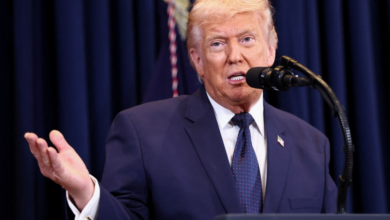
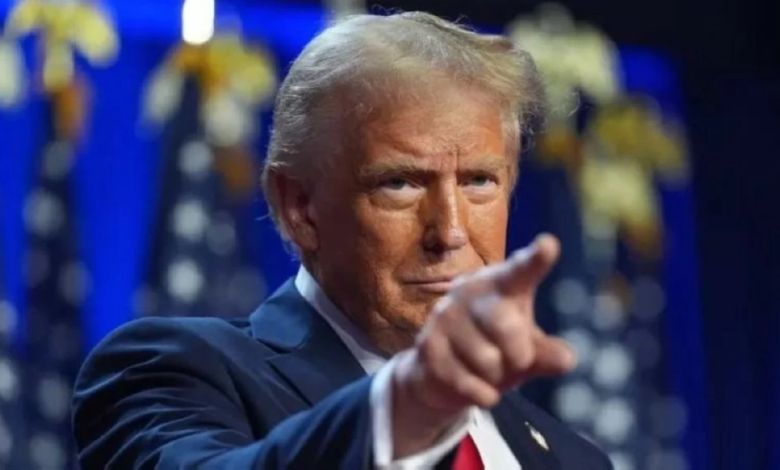
In a surprising escalation that has shaken global political and economic circles, US President Donald Trump threatened to launch a new trade war against his traditional European allies. Trump announced his intention to impose additional tariffs of 10%, effective February 1st, on Denmark, the country to which Greenland administratively belongs, as well as on a list of major European countries including Sweden, Norway, France, Germany, the United Kingdom, the Netherlands, and Finland. This threat is seen as a direct pressure tactic to force these countries to agree to a deal to hand over Greenland to the United States.
Final warning and gradual escalation
The US president didn't stop at the initial threat; he also set a timetable for escalating the sanctions, indicating in a post on the Truth Social platform that the tariffs would rise to 25% by next June if the US demands were not met. Trump asserted firmly, "These tariffs will remain in place until an agreement is reached to purchase Greenland in its entirety." It's worth noting that the targeted countries are already subject to previous tariffs known as the "Liberation Day Tariff," which came into effect in August 2025, further increasing the economic burden on the continent.
The strategic importance of Greenland: Why is Trump so insistent?
To understand the US administration's determination to acquire Greenland, one must consider the immense geopolitical importance of this Arctic island. Greenland is a vital strategic location for US national security, hosting Thule Air Force Base, the northernmost US military base, which plays a pivotal role in the missile early warning system and space surveillance. Furthermore, with the melting of Arctic ice, Greenland is emerging as a hub of untapped natural resources, including rare earth minerals essential for technological and military industries, making control of it a significant bargaining chip in international competition with powers like China and Russia.
Historical background and sensitive timing
Washington's interest in buying Greenland is not new; President Harry Truman offered to purchase the island for $100 million in gold in 1946. Trump himself raised the issue during his first term, a move that was met with staunch rejection from the Danish government, which described the idea as "absurd." However, the current US approach appears to have taken a more aggressive turn, particularly after the military and political successes Trump has touted, such as the operation in Venezuela and the arrest of Nicolás Maduro, which have bolstered his confidence in using economic pressure to achieve geopolitical gains.
Shock in Davos and strained transatlantic relations
This announcement comes at a highly sensitive time, as world leaders and top executives gather in the Swiss resort of Davos for the World Economic Forum. Trump is expected to address the conference in person next Wednesday, amid international anticipation and concern. This threat of punitive tariffs on NATO and EU allies would deeply fracture transatlantic relations and present the European economy, already struggling with inflation and energy challenges, with a severe test that could reshape international alliances in the coming years.