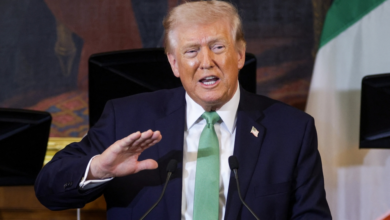

US President Donald Trump left the door open to all options in dealing with the Venezuelan crisis, including military action, in fiery remarks during a newspaper interview published on Friday. These statements further escalate tensions between Washington and Caracas, particularly as the US intensifies its pressure campaign aimed at economically crippling the Venezuelan regime through a strict oil embargo.
The military option is on the table
In an interview with NBC News, when asked directly whether he ruled out war or military action against Venezuela, Trump's response was brief and decisive: "I don't rule it out, no." While he refrained from explicitly stating his desire to oust Venezuelan President Nicolás Maduro, his signals were clear: "He knows exactly what I want. He knows better than anybody," reinforcing the prevailing belief that Washington seeks regime change in the Latin American nation.
Tanker War and Black Gold
The escalation wasn't limited to verbal threats; it moved to practical actions on the high seas. The US president confirmed that his country would continue seizing Venezuelan oil tankers, pointing to the de facto control by US forces of a tanker that sailed from Venezuela last week. This comes within the context of an "economic strangulation" strategy targeting the main lifeline of Venezuela's ailing economy.
In justifying these measures, Trump accused Venezuela of seizing "American rights" to energy, a historical reference to Caracas's nationalization of the oil industry, which harmed the interests of American companies. "They've taken all of our energy rights, they've taken all of our oil, and we want it back," Trump said sharply, highlighting the intertwining of economic ambitions with political conflict in a country possessing the world's largest proven oil reserves.
Militarization of the Caribbean and the fight against "narco-terrorism"
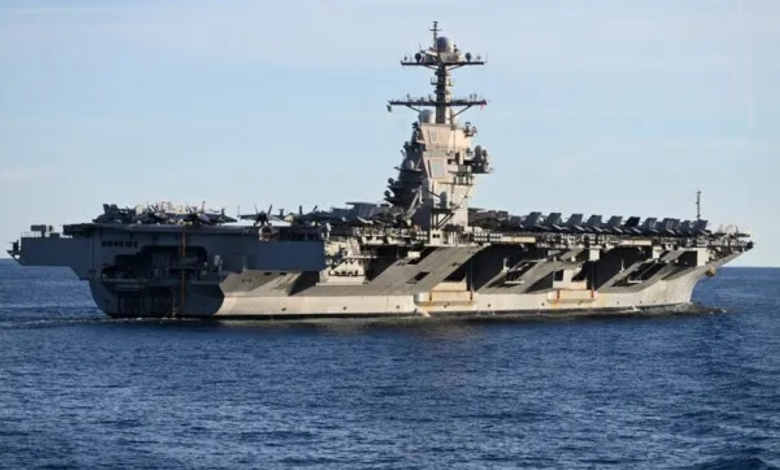
To bolster this pressure, the Trump administration has significantly increased the US military presence in the Caribbean in recent months. Washington uses the fight against drugs as a legal and moral justification for these actions, accusing the Maduro regime of running a "terrorist drug cartel." According to official statements, US forces have conducted multiple strikes since last September targeting smuggling boats, resulting in the deaths of more than 100 people, indicating that the confrontation has moved beyond diplomacy to limited clashes.
Historical context and geopolitical dimensions
This escalation cannot be understood in isolation from the historical context of strained relations between the two countries, which have deteriorated sharply since the era of the late President Hugo Chávez and continued under his successor, Maduro. Washington views Venezuela as a vital sphere of influence in the United States' "backyard" and fears the expansion of influence by rival international powers such as Russia and China, which support the Maduro regime.
The threat of war and an oil embargo not only affects the Venezuelan interior, which is suffering from a suffocating humanitarian crisis, but also casts a shadow on the stability of the global energy market and the security of the entire Latin American region, making the Venezuelan issue a ticking time bomb whose repercussions could explode regionally and internationally at any moment.