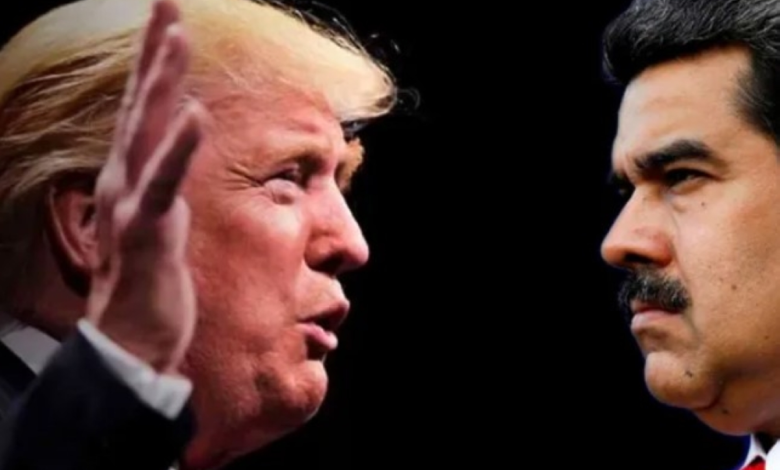

In a move described by observers as a radical shift in the rules of international engagement, US President Donald Trump justified the arrest of his Venezuelan counterpart, Nicolás Maduro, as an imperative to restore American prestige in the Western Hemisphere. This development was not merely a passing event, but rather the foundation of what Trump called the “Donroe Doctrine,” a modern and more aggressive version of the historic “Monroe Doctrine,” aimed at closing Latin America off to any foreign influence, particularly Chinese and Russian influence.
From Monroe to Dunroe: Historical Context and Strategic Shift
To understand the dimensions of this event, one must go back to 1823 when President James Monroe announced his famous doctrine, warning European powers against interfering in the affairs of the Americas. Today, Trump is reformulating this doctrine, associating it with his name, creating the “Donroe Doctrine,” and declaring in his press conference that the United States has moved beyond the old doctrine toward a strategy of absolute hegemony. According to this vision, Washington is no longer content with merely preventing foreign intervention; it now considers regime change and direct control a legitimate right to ensure regional stability, stem migration flows, and secure strategic resources.
National Security Strategy: Subtle Messages to China and Russia
Recent US moves are based on the new National Security Strategy document, which explicitly states that Washington will not tolerate any military capabilities or strategic assets belonging to its rivals in its sphere of influence. This message is directed squarely at China, the main buyer of Venezuelan oil and Caracas's largest lender, and at Russia, which has sought to bolster its military presence in the region. Analysts believe that Trump's "addendum" to this strategy aims to obstruct China's Belt and Road Initiative in Latin America.
Serious repercussions: Are we witnessing a repeat of the scenario in Taiwan and Ukraine?
This expansionist approach raises deep concerns in the international community that it sets a dangerous precedent, justifying similar behavior by America's adversaries in their traditional spheres of influence. If Washington grants itself the right to overthrow a government in Venezuela under the pretext of national security, China could find in this a perfect justification for any future military action to annex Taiwan, and Russia might use it to consolidate its control in Ukraine or other neighboring countries under the guise of protecting its vital interests.
UN concern and expert warnings
International reactions were swift, with UN Secretary-General António Guterres expressing concern over this “dangerous precedent.” Jennifer Kavanagh, director of the Defense Priorities Center, questioned what would prevent other countries from emulating the US, asking, “If the United States can declare an official illegitimate and remove him, what’s stopping others?” Alexander Gray, a researcher at the Atlantic Council, noted that this action marks the end of an era of tolerating Chinese, Russian, and Iranian influence in America’s backyard, signaling the beginning of a new phase of open geopolitical conflict.