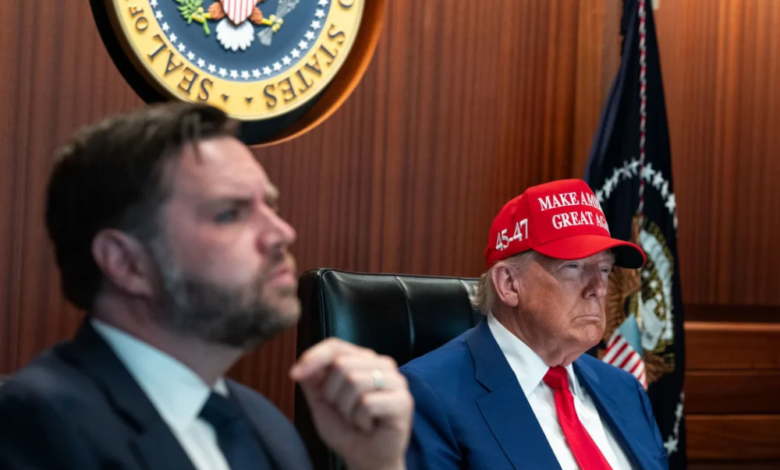
In a new escalation of geopolitical tensions, former US President and strong presidential candidate Donald Trump issued a stark warning to Tehran, urging the Iranian leadership to accelerate its efforts toward reaching a comprehensive agreement on its nuclear program. Trump presented the Iranian regime with two stark choices: either immediately come to the negotiating table or face military action that he described as “far worse” than anything the region has seen before.
Message via “Truth Social”
On his personal social media platform, Truth Social, the US president wrote in a firm tone: “We hope that Iran will quickly agree to sit down at the negotiating table and reach a fair and equitable agreement—no nuclear weapons.” Trump did not stop at a diplomatic invitation; he accompanied it with a direct threat of an attack exceeding in severity the US strikes that targeted Iranian sites last June, indicating American impatience with the stalling tactics on the nuclear issue.
Military forces and a huge fleet
In a striking indication of military seriousness, Trump spoke of strategic naval movements, noting the arrival of a “massive fleet” larger and more powerful than the one previously deployed to the Venezuelan coast. This comes within the context of bolstering the US military presence in vital regions, with Trump asserting that “the fleet is ready, prepared, and capable of accomplishing its mission swiftly and decisively if necessary,” reflecting the “maximum pressure” strategy he has long championed in his foreign policy.
The context of nuclear conflict and the history of tensions
These statements come at a time of stagnation and ongoing tension in US-Iranian relations since Washington's withdrawal from the Joint Comprehensive Plan of Action (JCPOA) in 2018. The United States insists on preventing Tehran from acquiring a nuclear weapon, considering it an existential threat to regional and international security. Historically, the relationship between the two countries has oscillated between limited military escalation and stalled negotiations, with Washington seeking to impose strict restrictions not only on Iran's nuclear program but also on its ballistic missile program and regional influence.
Repercussions of the regional landscape
This warning carries far-reaching implications for the Middle East and the Arabian Gulf. Any potential military escalation could have serious repercussions for maritime security in the Strait of Hormuz, a vital artery for global oil supplies. Observers believe that Trump's threats of overwhelming military force are aimed at pushing Tehran to accept harsher negotiating terms, exploiting its dire economic situation and international isolation. However, the scenario of open confrontation remains a nightmare that international powers are striving to avoid due to its potentially devastating cost to regional stability and the global economy.