
Egyptian star Mohamed Salah returned to Liverpool, the home of the Reds, carrying with him renewed ambitions and high spirits, after an absence of more than a month spent representing his country during the 2025 Africa Cup of Nations hosted by Morocco. Salah appeared with a broad smile that dispelled the sadness left by the end of the continental campaign, declaring his readiness for the upcoming European challenges.
The outcome of African participation in Morocco
The 35th edition of the Africa Cup of Nations witnessed fierce competition on Moroccan soil, with the Egyptian national team ultimately finishing in fourth place. This result came after a dramatic loss to Nigeria in the third-place match, which was decided by penalties 4-2. Those crucial moments saw Egyptian captain Mohamed Salah and his teammate Omar Marmoush miss their penalties, dashing the Pharaohs' hopes of reaching the podium.
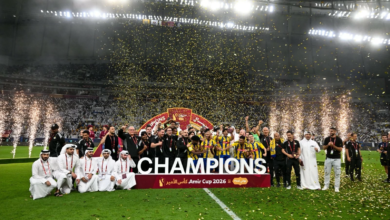
In the final scene of the tournament, the Senegalese national team succeeded in confirming its continental dominance by winning the coveted title, after defeating the host and public team, the Moroccan national team, by a clean goal in a final match characterized by competitiveness and tactical excitement.
Returning to Anfield... a professional mentality
Despite the bitter disappointment of the continental setback, Mohamed Salah once again demonstrated his exceptional professionalism. A broad smile graced his face as the Liverpool squad departed for France, preparing for their highly anticipated Champions League match against Olympique Marseille, scheduled for Wednesday. Liverpool's coaching staff and fans are placing great hope in the return of their star striker, whose presence would provide a tremendous boost both technically and morally at a crucial juncture in the season, especially given the intense competition in both European and domestic tournaments.
The ability to quickly integrate into the club environment and separate the international track from club commitments is a distinctive feature of top-tier global stars, and this is embodied by Salah, who seeks to make up for what he missed with the national team by achieving new glories in the Liverpool jersey.
Liverpool's star-studded squad
In preparation for the European match, Liverpool's coaching staff announced the traveling squad, which included a mix of experienced players, young talents, and strong signings, and is as follows:
- Goalkeepers: Alisson, Mamardashvili, Woodman.
- Defense line: Van Dijk, Gomez, Kirkeez, Robertson, Frimpong.
- Midfielders: Endo, Szoboszlai, Mac Allister, Wirtz, Gravenberch, Nyoni, Ngomoha, Gonz.
- Attack line: Mohamed Salah, Chiesa, Gakpo, Eketeke.