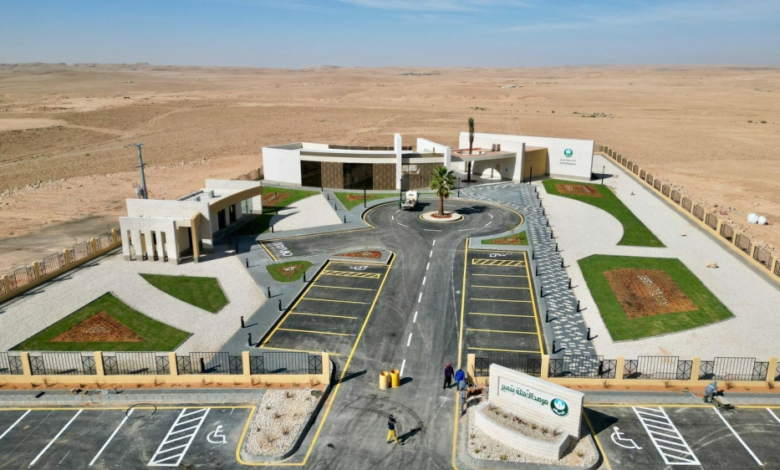
The Tumair Observatory is preparing to observe the crescent moon of Shawwal and Eid al-Fitr

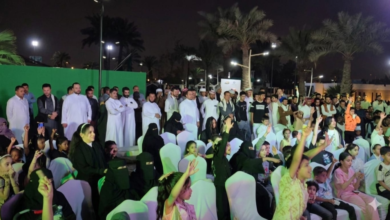
Muslims in Saudi Arabia and across the Islamic world are turning their attention to the Tumair Observatory , which is preparing today to receive observers and official committees to sight the crescent moon of Shawwal, heralding the arrival of Eid al-Fitr. These preparations are taking place amidst comprehensive facilities and extensive on-site arrangements that support the accuracy of astronomical observations and facilitate access to the site for specialists and those interested.
Historical context: A legacy spanning over a century
The sighting of the new moon is a significant Islamic ritual linked to determining the beginnings of the lunar months, particularly Ramadan, Eid al-Fitr, and Eid al-Adha. In this context, the city of Tameer has been renowned for its moon-sighting practices for over 100 years. In the past, local observers would ascend to the mountainous and rocky heights at the beginning of each lunar month to observe the crescent moon with the naked eye. This is a deeply rooted tradition passed down through generations, relying on keen eyesight and extensive knowledge of the moon's phases, the movement of the stars, and weather patterns.
The importance of the event and its local and international impact
The moon sighting at the Tumair Observatory is of paramount importance, extending far beyond the local level. Locally, the Supreme Court of Saudi Arabia relies on the testimonies of trusted observers at official observatories, foremost among them the Tumair Observatory, to issue the official and religiously binding declaration of the start of the new month. Regionally and internationally, millions of Muslims and numerous Islamic countries and centers around the world eagerly await the Kingdom's announcements, given its leading religious position and its custodianship of the Two Holy Mosques. This gives the results of the Tumair moon sighting a direct impact on determining the date of Eid al-Fitr globally.
Stages of development and government support
The Tumair Observatory has undergone successive transformations to keep pace with scientific and technological advancements. In 1436 AH (2014/2015 CE), the first official crescent sighting observatory in the city was established under the supervision of the Tumair Municipality, with the aim of organizing the efforts of those observing the crescent and supporting observation activities. Recently, the observatory was inaugurated in its new form by His Royal Highness the Mayor of Riyadh, as part of the Riyadh Municipality's ongoing efforts to develop and enhance the readiness of crescent sighting sites. The upgrades included the construction of a modern and fully equipped facility, serving as an advanced center that combines traditional sighting methods with precise astronomical calculations, thus contributing to raising public awareness of astronomy.
Geographical advantages of the Tumair Observatory
The selection of Tumair as one of the Kingdom's most important observatories was not arbitrary, but rather due to several unique geographical and environmental factors that made it an ideal location for observation, most notably:
- Altitude above sea level: The observatory is located at an altitude of approximately 678 meters, giving observers an excellent viewing angle.
- Geographical nature: The region is characterized by a desert nature that provides a wide horizon and visual purity free from natural obstacles.
- Pure environment: The site enjoys a quiet environment with minimal light influences (light pollution) and dust particles, which enhances the accuracy of vision.
- Modern facilities: Provides facilities and support services that support the work of the committees and provide them with a comfortable environment.
These tremendous efforts come within the framework of the efforts of the concerned authorities in the Kingdom to integrate authenticity with modernity, by preserving the legitimate sighting tradition while harnessing the latest astronomical technologies, in line with the Kingdom’s vision objectives in developing infrastructure and services.