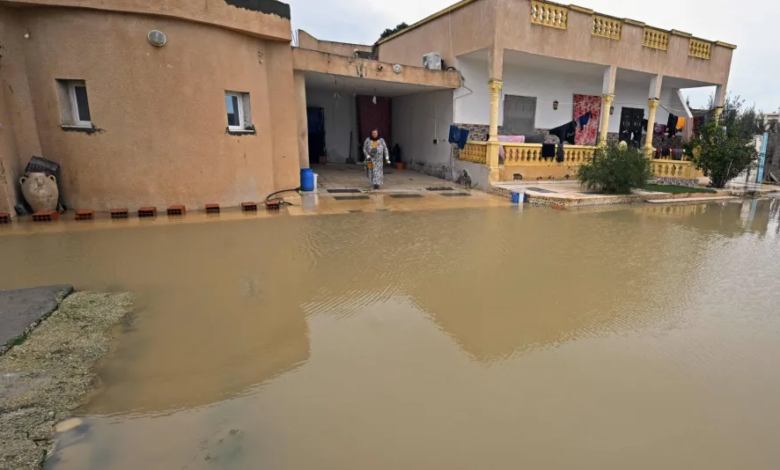

Several governorates in Tunisia experienced a wave of severe weather and torrential rains, resulting in significant loss of life and property. Official sources confirmed that the death toll from the flash floods has risen to five, an incident that has brought back into focus the dangers posed by seasonal weather fluctuations in the country.
Continued suspension of studies and safety measures
Given these severe weather conditions, the relevant authorities, in coordination with the Ministry of Education, have decided to continue suspending classes in educational institutions in the most affected areas. This decision comes as a necessary precautionary measure to protect pupils, students, and educational staff from the risks of travel due to rising water levels in valleys and roads, and the difficulty of movement in many urban and rural areas.
Civil protection, search and rescue efforts
Tunisian Civil Protection units are continuing their intensive efforts to pump water from homes and public buildings, as well as securing roads and removing obstacles swept away by the floods. All available logistical and human resources have been mobilized to respond to reports from citizens, with a focus on low-lying areas and known problem areas where rainwater accumulates, posing a risk to public safety.
General context and infrastructure challenges
These incidents are part of a recurring challenge Tunisia faces during the autumn and winter seasons, when torrential rains over short periods lead to flash floods. This distressing event has reignited the debate about the state of infrastructure and drainage networks in many Tunisian cities, and their capacity to handle the record amounts of rainfall that have been falling with increasing frequency in recent years.
Climate change and its impact on the region
Meteorologists and environmental experts link the increasing intensity of these weather phenomena to climate change affecting the Mediterranean basin and North Africa. Studies indicate that the region has become more susceptible to extreme weather events, ranging from prolonged droughts to sudden and torrential downpours, necessitating the development of long-term national strategies to adapt to this new climatic reality and mitigate the risks of natural disasters.
The authorities are calling on all citizens to exercise caution and stay away from valleys and flood channels, and to adhere to public safety guidelines until the weather stabilizes.