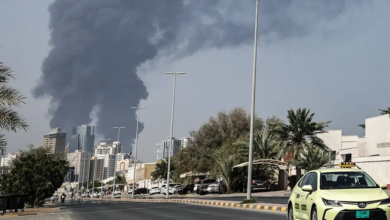

In a significant security development reflecting heightened tensions in the Arabian Gulf region, the air defense systems of the United Arab Emirates, Qatar, and Bahrain successfully intercepted a series of missile attacks launched from Iranian territory. This incident underscores the readiness of Gulf air defenses to counter sudden ballistic and aerial threats, amidst international calls for restraint and preventing the region from sliding into open conflict.
The efficiency of Gulf defense systems
The successful interception demonstrated the high efficiency of the Gulf Cooperation Council (GCC) countries' defense arsenals. These countries, led by the UAE, Qatar, and Bahrain, have invested billions of dollars over the past decade to modernize their defense systems, relying heavily on advanced systems such as the Patriot and the American THAAD system, designed to intercept ballistic missiles at high altitudes. Military experts indicate that this implicit or simultaneous coordination in repelling attacks reflects a qualitative development in the Gulf's defense doctrine and its ability to protect airspace and vital installations from any external threats.
Context of regional tensions and historical background
This event cannot be separated from the broader context of ongoing tensions in the Middle East. The Arabian Gulf region has long been an arena for political and security rivalries, particularly concerning the Iranian nuclear program and regional influence. These attacks come at a time of intense diplomatic activity and attempts to realign alliances in the region. Historically, the region has witnessed similar incidents targeting oil facilities or shipping lanes, making energy security and the security of waterways a top priority for both the Gulf states and the international community.
Expected economic and political repercussions
This escalation is expected to cast a shadow over the global economic landscape, given the strategic importance of the Gulf states as a major energy supplier. Such security incidents typically lead to volatility in global oil prices and concerns about supply chains through the Strait of Hormuz. Politically, this incident may push for greater cooperation and security coordination between the Gulf Cooperation Council (GCC) states and their international allies, particularly the United States and European countries, to ensure regional stability and deter any future threats to international peace and security.
The international stance and the need for de-escalation
As soon as news of the attacks was reported, international reactions poured in, praising the readiness of the Gulf defenses and simultaneously calling for de-escalation. The international community recognizes that any large-scale conflict in this vital region would be extremely costly for everyone. Therefore, we are likely to witness intensive diplomatic efforts in the coming days to contain the situation, while emphasizing the right of states to defend their sovereignty and the security of their citizens against any external aggression.