Ahmed Hassan Kouka's injury: A touching message and a promise to Al-Ettifaq fans

A state of deep sadness prevailed over the Egyptian international striker, Ahmed Hassan “Koka”, a player for the Saudi Al-Ettifaq club, after he suffered a severe injury that forced him to leave the field during his team’s match against Al-Akhdoud club, which was held on Friday as part of the competitions of the thirteenth round of the Saudi Professional League.
Difficult moments and tears at the "Igo" stadium
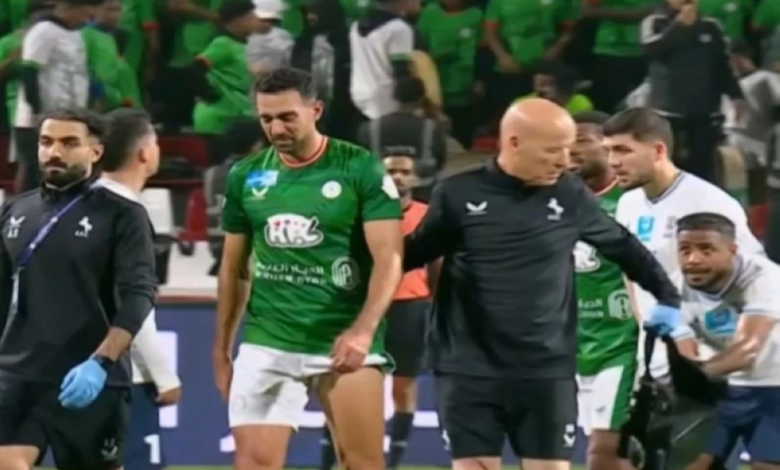
The 71st minute of the match was a tense one, as Koka collapsed on the pitch at the Eju Stadium, suffering a muscle injury. He left the field in tears, a scene that moved both the fans present and those watching on television. These tears reflected the depth of the player's emotional pain, especially as this is not the first injury to hinder his progress this season.
Instagram message: Unprecedented frustration
In his first reaction, the Egyptian striker took to his official Instagram account to express his feelings, writing poignant words that revealed the depth of his psychological crisis. Koka said, "I can't describe the frustration and sadness I feel. I've never experienced anything like this in my football career. This injury is more difficult than the previous one, and it's incredibly frustrating.".
Koka pointed to his usual professionalism, saying: “Those who know me well understand how committed and professional I am to my work, so this feeling is heavy on me, and I don’t wish it on any player.”.
A remarkable career and the challenges of the Saudi League
To understand the extent of Koka's frustration, one must consider the broader context of his professional career. He boasts a long and distinguished history in European football, having played in the Portuguese league with Sporting Braga and Rio Ave, achieved success in the Greek league with Olympiacos, and also had a stint in Turkey. Throughout these years, Koka has been known for his mental fortitude and ability to bounce back, making his statement that he has "never experienced this frustration before" a clear indication of the difficult timing and recurring injuries he has faced in a highly competitive and physically demanding league like the Saudi league today.
The impact of absence and the promise of return is stronger
Koka's injury comes at a time when Al-Ettifaq needs all its professional players to keep pace with the high level of competition in the Roshan League, which features a selection of the world's best players. The absence of a striker with Koka's experience may temporarily disrupt the coaching staff's plans, but the player expressed great determination and resolve in his concluding remarks.
Koka made a firm promise to Al-Ettifaq fans, saying, "I promise the Al-Ettifaq supporters that the 100% I've always given in training and matches will now turn into 200%. I will do everything I can to come back stronger, score goals, and help the team in every way possible." The fans are now awaiting the results of medical tests to determine the exact duration of his absence, hoping for a swift return for the prolific striker.