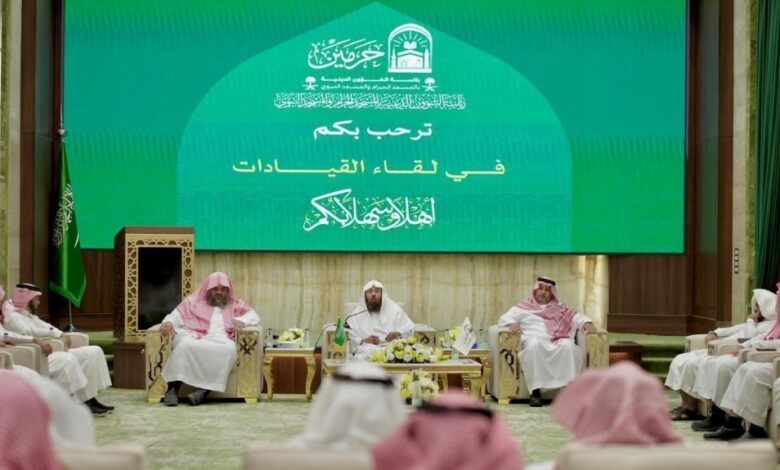
Al-Sudais launches the Excellence and Creativity Award under the auspices of the Ministry of Religious Affairs

In a move aimed at enhancing the religious services provided at the Two Holy Mosques, the President of Religious Affairs at the Grand Mosque and the Prophet's Mosque, Sheikh Dr. Abdulrahman bin Abdulaziz Al-Sudais, announced the launch of the "Excellence and Innovation Award" within the Presidency. This announcement comes as part of a comprehensive strategy to motivate staff and encourage innovative initiatives that serve the pilgrims.
Enhancing governance and institutional efficiency
During his meeting with the leadership of the General Presidency for the Affairs of the Two Holy Mosques, following the issuance of a series of developmental decisions, Sheikh Al-Sudais emphasized that the current and future phases necessitate a radical improvement in the efficiency of institutional work. He stressed the importance of strengthening the integration between strategic planning, field implementation, and meticulous follow-up, noting that establishing the principles of good governance is the cornerstone for achieving the Presidency's strategic objectives and ensuring that work proceeds according to the highest standards of quality and transparency.
Objectives of the Excellence and Creativity Award
The newly announced award aims to foster a positive competitive environment among the Presidency's staff and to recognize outstanding performance that contributes to the development of religious services. Through this initiative, the Presidency seeks to encourage creative ideas and innovative solutions to practical challenges, thereby positively impacting the experience of pilgrims, Umrah performers, and visitors to the Two Holy Mosques.
The universality of the message and keeping pace with Vision 2030
In a related context, Al-Sudais emphasized the importance of being mindful of both national and religious duties, stressing that the message of the Two Holy Mosques is a universal message that must reach all corners of the earth. He pointed to the efforts made in translating sermons and lessons and guiding visitors in their various languages and cultures, to ensure that the guidance of Islamic law and the moderate message of Islam reach everyone, which enhances the Kingdom's soft power and its leading position in the Islamic world.
These initiatives align with the goals of the Kingdom's Vision 2030, specifically the "Guests of God Service Program," which aims to facilitate the hosting of pilgrims to the Two Holy Mosques and provide them with the highest quality services. Developing the religious infrastructure is an integral part of the pilgrim's spiritual journey.
Beneficiary satisfaction indicators
The head of religious affairs concluded his remarks by praising the recent performance indicators, which showed high levels of satisfaction among beneficiaries of religious services. He emphasized that this achievement reflects the quality of the outputs, but at the same time constitutes an incentive and a responsibility to continue development and improvement processes, in order to fulfill the aspirations of the wise leadership – may God support them – in providing the best services to the pilgrims.