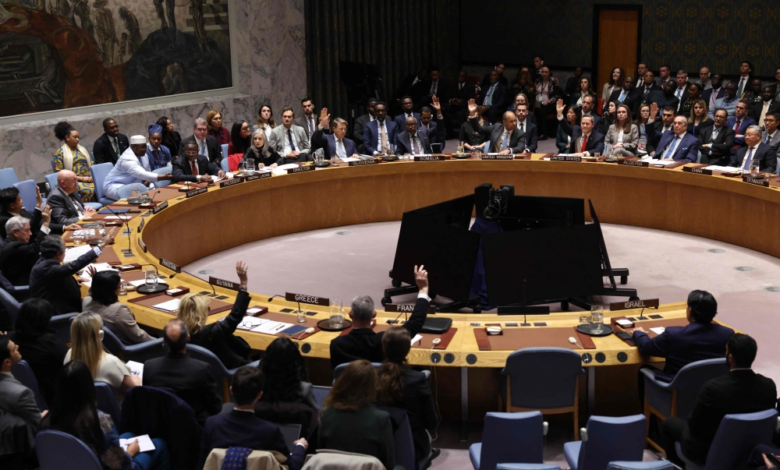
The Security Council is discussing the situation in Iran at the request of the United States, amid international concern

The UN Security Council held a crucial meeting to discuss developments in Iran , following a formal request from the United States, reflecting growing international concern over events in Tehran. The session, held under the agenda item "The Situation in the Middle East," was attended by all fifteen members of the Council to discuss the security and political implications of the ongoing events.
UN calls for diplomacy and dialogue
During the meeting, the United Nations reiterated its firm position that diplomatic solutions remain the best option for defusing crises. UN officials emphasized that the best way to address all concerns related to the Iranian issue, whether concerning the nuclear program, internal affairs, or human rights, is through diplomatic channels and constructive dialogue, warning against the dangers of escalation, which could drag the region into further instability.
International concern and the G7 position
This meeting comes at a time of increasing international pressure on Tehran. The activity at the Security Council coincided with statements issued by the foreign ministers of the G7 countries, who expressed their deep concern over reports of casualties and injuries among protesters. The group strongly condemned the excessive use of force, arbitrary arrests, and intimidation tactics employed by security forces, emphasizing the need to respect human rights and freedom of expression.
Background and regional context
This meeting cannot be separated from the broader context of strained relations between Tehran and the West. For years, the Iranian issue has been a central focus of Security Council discussions, particularly concerning the nuclear agreement, ballistic missile programs, and accusations that Iran is destabilizing the region. The United States and its allies view internal developments in Iran as a worrying indicator requiring a coordinated international response.
Expected effects
Observers believe that holding this meeting at the request of the United States carries clear political implications, aimed at mobilizing international public opinion and highlighting internal practices in Iran. Although obtaining binding Security Council resolutions may face obstacles due to the divergent positions of permanent members (such as Russia and China), simply raising the issue for discussion places additional political pressure on Tehran and could pave the way for unilateral sanctions or diplomatic measures by Western countries in the near future.