The United Nations warns of a worsening crisis in Venezuela and calls for dialogue

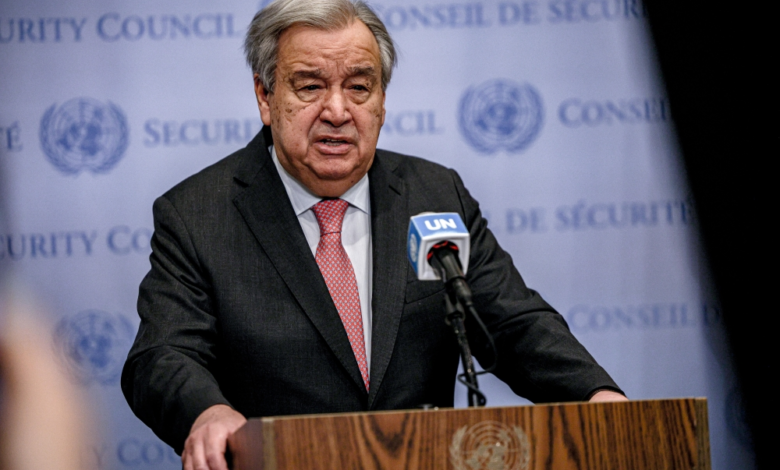
United Nations Secretary-General António Guterres expressed his deep and growing concern about the potential for Venezuela to descend further into instability and chaos, following reports of a US military operation in the country. This UN warning comes at a time of escalating international tensions, placing the Venezuelan crisis once again at the forefront of the international community's priorities.
Context of the crisis and background of the tension
The current UN warnings cannot be separated from the complex historical and political context that Venezuela has been experiencing for years. The South American nation, which possesses the world's largest proven oil reserves, is suffering from a severe economic and political crisis that has led to the collapse of its currency and acute shortages of basic goods. This situation has resulted in sharp political polarization between the government and the opposition, making the country an arena for international and regional rivalries.
In a statement delivered on behalf of the Secretary-General, Under-Secretary-General for Political and Peacebuilding Affairs Rosemary DiCarlo told the Security Council that all actors in Venezuela must engage in a genuine and inclusive democratic dialogue. She noted that the only sustainable solution lies in enabling all sectors of society to freely determine their future, with full respect for human rights and the rule of law, and free from external interference that could exacerbate the conflict.
The international stance on foreign intervention
The UN Secretary-General stressed the need for strict adherence to the rules of international law, explaining that the maintenance of international peace and security depends fundamentally on all member states complying with the provisions of the UN Charter. In this regard, the UN High Commissioner for Human Rights, Volker Türk, expressed his deep concern regarding US intervention in Venezuela, calling on all parties to exercise maximum restraint and respect international human rights law to avert a humanitarian catastrophe.
The United Nations Charter as a binding framework
In a related context, the Presidency of the UN General Assembly highlighted the organization's fundamental principles, with Annalena Baerbock stating that "the UN Charter is not an option to be ignored, but rather a binding guiding framework in times of both peace and crisis." She noted that the current situation in Venezuela, culminating in military action, warrants a reminder of Article 2 of the Charter.
Article 2 clearly states that all member states must refrain in their international relations from the threat or use of force against the territorial integrity or political independence of any state. This reminder underscores the international organization's rejection of any unilateral actions that could undermine national sovereignty and are contrary to the purposes of the United Nations.
Expected regional and international repercussions
Observers believe that the deteriorating situation in Venezuela will not be confined to its borders, but could extend to the entire region. From a humanitarian perspective, military escalation could trigger new waves of displacement, adding to the millions of Venezuelans who have already fled their country in recent years, thus placing further strain on neighboring states. Economically, any major instability in Venezuela could impact global energy markets due to its oil reserves, making the country's stability a shared international interest that necessitates urgent diplomatic solutions rather than military escalation.