Residents of Tawergha accuse the unity government of ignoring court rulings

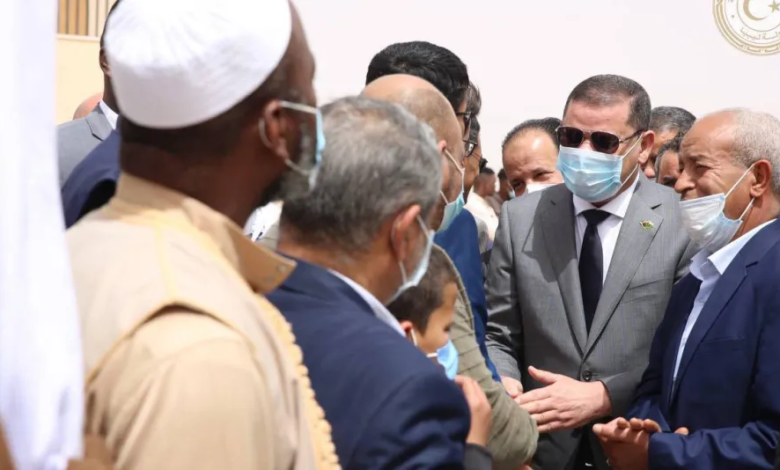
Residents of the Libyan city of Tawergha have expressed their deep dissatisfaction with what they describe as the interim Government of National Unity's disregard for court rulings issued in their favor. They assert that the executive authority is stalling in fulfilling its legal and moral obligations towards the displaced and the devastated city. These complaints come at a sensitive time for Libya, as the Tawergha issue is considered a key test of genuine national reconciliation.
The roots of the crisis and the background of forced displacement
The tragedy of Tawergha dates back to the events of the February 17, 2011 revolution, when the city and its inhabitants were subjected to mass forced displacement and complete exodus, following accusations of supporting the regime of the late Colonel Muammar Gaddafi against the revolutionaries of the neighboring city of Misrata. Since then, tens of thousands of the city's residents have lived in camps scattered between Tripoli, Benghazi, and other areas, in humanitarian conditions described by international and local human rights organizations as catastrophic, amidst a severe shortage of basic services and healthcare.
Court rulings and enforcement difficulties
Despite the signing of a reconciliation agreement between the cities of Misrata and Tawergha in 2018, which theoretically paved the way for the return of residents, the reality on the ground remains complex. The residents base their current grievances on final court rulings mandating compensation for those affected, the rehabilitation of the city's almost completely destroyed infrastructure, and the provision of basic services that would enable them to return and live in dignity. The residents believe that the Government of National Unity, as the executive authority controlling financial resources, has failed to fulfill its responsibility to implement these rulings, rendering the return decisions meaningless in the absence of basic necessities.
The importance of the file and its impact on national stability
The Tawergha issue has acquired paramount importance, extending beyond its local dimension to impact the political and security landscape in Libya as a whole. Resolving this issue is a cornerstone of the national reconciliation project adopted by the Presidential Council and the international community as a prerequisite for holding fair and inclusive elections. Continued disregard for court rulings and the marginalization of the demands of the people of Tawergha not only deepens social wounds but also sends negative messages about the rule of law in Libya and hinders efforts to bridge the divide between the various components of Libyan society, potentially leading to continued tension and instability in the western region and the country as a whole.