UNRWA warns: Systematic campaign of destruction and humanitarian catastrophe in Gaza

The Commissioner-General of the United Nations Relief and Works Agency for Palestine Refugees (UNRWA), Philippe Lazzarini, issued a strongly worded warning from the Belgian capital, Brussels, describing what is happening in the Gaza Strip as a "systematic campaign of destruction" that has crossed all humanitarian boundaries, stressing that the disaster that the population is experiencing has not yet ended, but has entered more complex and dangerous stages.
Historical context and an unprecedented crisis
Lazzarini's remarks come at a time when the UN agency, established in 1949 to provide aid to Palestinian refugees, is facing its most difficult challenges since its inception. The ongoing war in the Gaza Strip has not only resulted in immense human suffering but has also struck at the very heart of the humanitarian infrastructure. Observers note that targeting UNRWA and its facilities sets a dangerous precedent that threatens the entire international humanitarian system, as the agency is the lifeline for more than 5.9 million Palestinian refugees in the region, including some two million in Gaza who depend on it entirely under the crippling blockade.
Documenting hell in the absence of media
During the opening of a photo exhibition documenting the tragedy, Lazzarini explained that UNRWA staff worked in extremely dangerous conditions to document what he described as a "systematic campaign of destruction" targeting both people and infrastructure over the course of two years. He noted that this documentation is of paramount importance given the ban on independent international media access to the Gaza Strip, making the testimonies of aid workers the primary source for conveying the reality of the suffering of two million people, half of them children, who face bombardment, repeated displacement, and the loss of their families.
The pivotal role amidst the rubble
Despite the immense challenges, the Commissioner-General affirmed that UNRWA remains the backbone of the humanitarian response in Gaza. Data reveals that the agency currently provides approximately 40% of the remaining primary healthcare services in the Strip, with its staff conducting nearly 18,000 medical consultations daily. Its role extends beyond medical care to include essential vaccination campaigns to prevent disease outbreaks, nutritional assessments for children, water quality testing, operation of wells and desalination plants, and waste management – vital services that prevent a complete collapse of public health.
Education: The Battle to Preserve the Future
Speaking about the future, Lazzarini emphasized that education is a top priority, no less important than food and medicine. The agency continues its efforts to educate 60,000 children through in-person classes and another 300,000 through online learning. Experts believe that getting children back into school is the first and most essential step in addressing deep psychological trauma, building hope, and preventing an entire generation from being drawn into extremism or despair as a result of harsh circumstances.
Political challenges and violations of international law
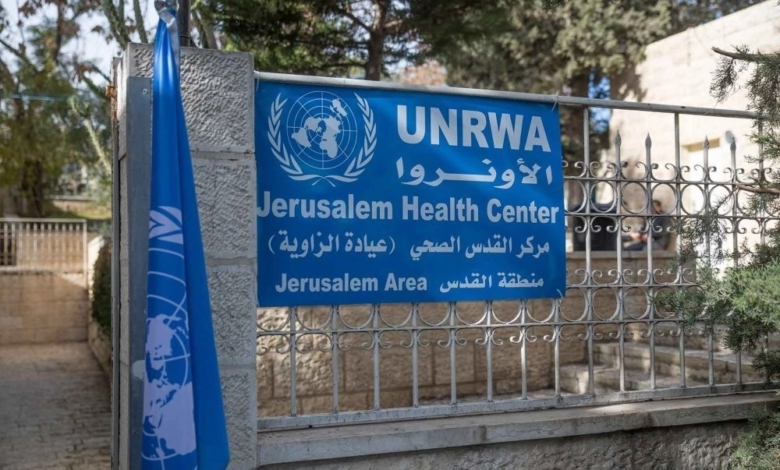
Lazzarini also addressed the political and legislative pressures facing the agency, pointing to new Israeli legislation targeting UNRWA's presence in occupied East Jerusalem, including cutting off water and electricity to its facilities and raiding and demolishing its headquarters in the Sheikh Jarrah neighborhood. He stressed that these practices constitute a flagrant violation of international law and the immunities enjoyed by UN agencies, warning that undermining UNRWA's work would have disastrous consequences not only for Palestinians but also for regional and international stability.