The peak of the Ursid meteor shower in 2025: the date of the phenomenon and how to observe it in the Arab world

The skies of the Arab world are preparing to welcome a distinctive astronomical event that will conclude the year 2025 with its astronomical phenomena, as the region will witness the peak of the Ursid meteor shower, starting from midnight tomorrow and during the early hours of Tuesday, December 23, 2025. This event coincides with the winter solstice and the beginning of winter astronomically, which gives a special character to observing the sky on the longest night of the year.
Details of the astronomical phenomenon
Engineer Majed Abu Zahra, head of the Jeddah Astronomical Society, stated that the Ursid meteor shower is active annually between December 17 and 25. This phenomenon occurs when the Earth, in its orbit around the sun, passes through a cloud of dusty debris scattered along the orbit of the periodic comet 8P/Tuttle. As these dust particles enter the Earth's atmosphere at high speeds, they burn up due to intense friction with the air at altitudes ranging from 80 to 120 kilometers, appearing to us as flashes and rapid streaks of light that are truly captivating.
The causative comet and its scientific background
The Ursid meteor shower is unique due to its source: Comet 8P/Tuttle, a periodic comet that orbits the Sun approximately every 13.6 years. Although considered a minor shower compared to more intense ones like the Perseids or the Gemini, it holds particular scientific importance for astronomers, offering an opportunity to study the distribution of dust and debris in the solar system. These meteors appear to originate from a radiant point in the constellation Ursa Minor, specifically near Polaris, hence their name.
Best times and methods of monitoring
The head of the Jeddah Astronomical Society explained that the chances of seeing meteors increase as the radiant point rises in the sky, which is clearly the case above the northern horizon. The shower is expected to peak during the early morning hours, when observers under ideal viewing conditions (away from city light pollution) can see between 5 and 10 meteors per hour. Fortunately, this year the moon will be in its new crescent phase, meaning it will set early and will not be visible during the peak hours, leaving the sky completely dark and enhancing the chances of seeing even the faintest meteors.
History of the discovery of bears
Historically, Abu Zahra pointed out that the Ursid meteor shower is a relatively recent discovery in observational astronomy compared to the major annual meteor showers known to humankind since ancient times. It was only identified and documented as a periodic shower about a century ago, specifically in the early 20th century, after astronomers observed that a number of meteors appearing in late December all originated from the same celestial region in the constellation Ursa Minor, confirming that they were not random but rather linked to the orbit of a specific comet.
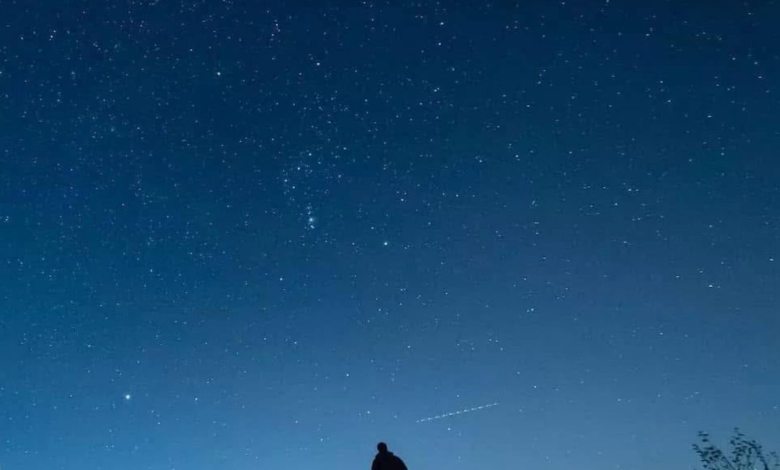
Experts are calling on astronomy enthusiasts and lovers of natural phenomena to take advantage of this opportunity, as observing meteors does not require any special equipment such as telescopes. Rather, it is enough to look with the naked eye towards the northern horizon from a dark and open location, allowing the eye to adapt to the darkness for at least 20 minutes to get the best viewing experience.