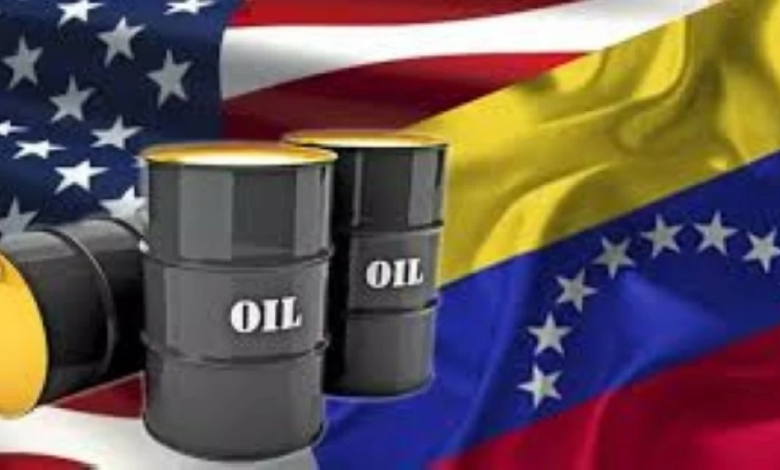

The United States has officially announced the start of procedures to market Venezuelan oil in preparation for selling it in global markets, in a radical strategic shift aimed at restructuring the energy sector in Latin America and strengthening Washington’s economic influence, following the recent political developments in Caracas, represented by the arrest of President Nicolas Maduro.
Marketing mechanism and international partnerships
The U.S. Department of Energy announced in an official statement today that the federal government has contracted with major global commodity marketing companies and leading banking institutions to manage the sale of Venezuelan crude oil and refined products. This move aims to ensure a professional supply flow that complies with international standards, overcoming years of isolation suffered by the Venezuelan oil sector.
Financial oversight and distribution of returns
On the financial side, the ministry confirmed that Washington would provide the necessary financial and logistical support to finalize these deals. A rigorous mechanism has been put in place to ensure transparency, whereby oil sales proceeds will first be deposited into US-supervised and controlled bank accounts at recognized international banks. These measures aim to guarantee the legitimacy of the funds, the fair and equitable distribution of revenues, and to prevent their diversion to any unauthorized parties.
The statement added: “The proceeds from the sale of oil will be strategically redirected for the benefit of the American and Venezuelan people, and sales are scheduled to begin immediately with quantities ranging between 30 and 50 million barrels, with ambitious plans to sustain and expand these sales in the near future.”.
Historical background and importance of Venezuelan oil
This step is of paramount importance given Venezuela's position on the global energy map; the country possesses the world's largest proven oil reserves, exceeding 300 billion barrels, surpassing even Saudi Arabia. However, Venezuela's oil sector has suffered severe infrastructure deterioration and a decline in production from over 3 million barrels per day to historically low levels over the past two decades, due to mismanagement, economic sanctions, and a lack of foreign investment.
Easing sanctions and revitalizing infrastructure
In a related development, the ministry noted that Washington has begun implementing a selective and deliberate easing of sanctions previously imposed on Venezuela's energy sector. This easing allows for the transport and marketing of crude oil and its derivatives through internationally recognized legal channels, paving the way for the return of Venezuelan heavy crude, which is needed by many US refineries.
The ministry stated that the energy agreement announced yesterday by President Donald Trump will play a pivotal role in allowing Venezuela to import advanced technological equipment and specific oil services. These imports aim to support the modernization of the state-owned oil company's dilapidated infrastructure, halt the decline in production rates, and improve the national electricity grid, which has suffered from frequent outages that have negatively impacted the economy and the lives of citizens.
Economic and geopolitical impact
Observers believe that the return of Venezuelan oil to the markets under US supervision will contribute to the stability of global energy prices, and it also represents a redrawing of the geopolitical map in the Western Hemisphere, as Washington seeks to ensure energy security and prevent rival international powers from seizing energy resources in the United States' backyard.