The United States calls on Thailand and Cambodia to implement a ceasefire immediately

In an official statement released on Saturday, US Secretary of State Marco Rubio welcomed the ceasefire agreement reached between the kingdoms of Thailand and Cambodia, stressing the need for its immediate implementation on the ground. This call from the US comes at a sensitive time, as the region experiences escalating border tensions that have raised concerns within the international community.
US call for implementation of Kuala Lumpur agreements
In the statement, Rubio emphasized the importance of full adherence to the Kuala Lumpur Peace Accords, following the pledge by the two Southeast Asian neighbors to end the deadly clashes. The US Secretary of State said, "We call on Cambodia and Thailand to immediately honor this commitment and fully implement the Accords." He noted that the United States is closely monitoring the situation, considering stability in this region a cornerstone of security in the Indo-Pacific.
Background of the conflict and a history of border tensions
To understand the depth of this conflict, one must examine the historical background of relations between Bangkok and Phnom Penh. The two countries share a long land border, and these border regions have frequently been the scene of disputes rooted in the colonial era and the maps drawn by the French at the beginning of the 20th century. Perhaps the most prominent point of historical contention has centered on the Preah Vihear temple complex, which has seen intermittent clashes for decades. The International Court of Justice ruled that the temple belonged to Cambodia, while the surrounding areas remained disputed.
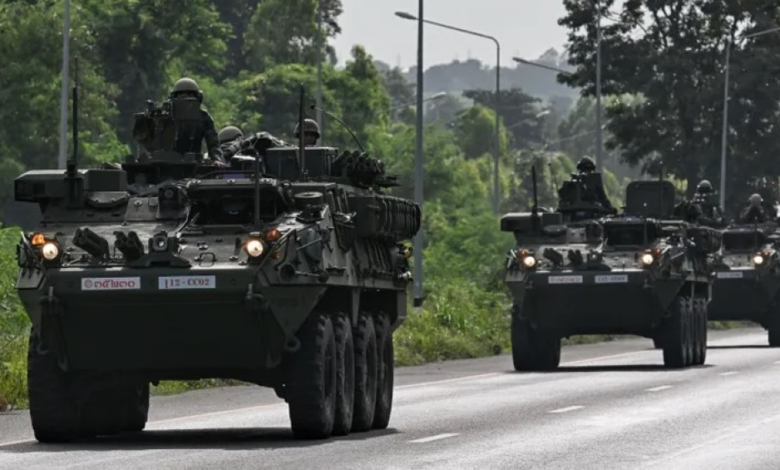
The renewed clashes in recent weeks, which have left dozens dead, are reminiscent of previous rounds of conflict that required international and regional intervention to contain them. Observers note that border disputes are often influenced by domestic politics in both countries, where nationalist sentiment is sometimes used to garner popular support.
Humanitarian repercussions and the importance of regional stability
The effects of these clashes are not limited to the military and political spheres; they extend to serious humanitarian consequences. Recent fighting has displaced thousands of villagers from their homes on both sides of the border, creating a humanitarian crisis that requires an urgent response. The ongoing exchange of fire is destroying infrastructure and disrupting the daily lives of innocent civilians.
Regionally, this conflict poses a challenge to the Association of Southeast Asian Nations (ASEAN), which consistently strives to maintain cohesion and unity among its members. American pressure and calls for the implementation of the Kuala Lumpur Agreements are part of broader diplomatic efforts to prevent the region from descending into open warfare, which could severely disrupt trade and tourism routes upon which Southeast Asian economies heavily rely.
In conclusion, analysts believe that Washington’s welcome and call for immediate implementation reflects the desire of major powers to cool global hotspots, especially in areas of strategic economic importance, while awaiting the outcome of the coming days in terms of actual commitment on the ground by Thai and Cambodian forces.