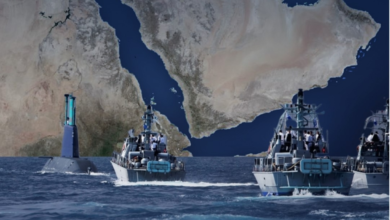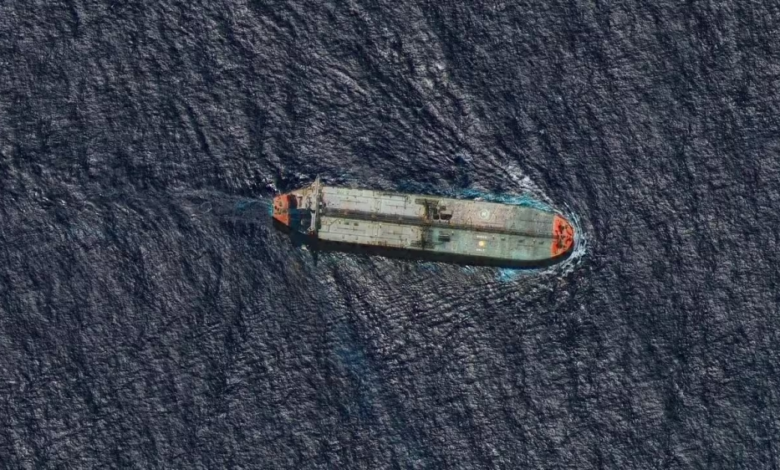

Rear Admiral David Barata, a senior officer in the US Coast Guard, revealed shocking facts about the size of what is known globally as the “dark fleet,” noting that intelligence estimates confirm the existence of between 600 and 800 ships currently roaming the world’s seas, working for countries subject to strict international sanctions such as Iran, Venezuela, China, and Russia.
In a congressional hearing, Barata explained that U.S. and international efforts, despite their intensity, have only succeeded in intercepting a very small percentage of these ships, with only 7 ships recently seized, a number that reveals the scale of the security and logistical challenge facing Western naval forces in pursuing the complex smuggling networks that operate this fleet.
Maritime camouflage and deception tactics
The US official noted that the ships of the “dark fleet” not only sail secretly, but also employ sophisticated technologies and deceptive tactics to mislead international monitoring systems. Among these methods are the use of forged ownership documents, impersonating previously dismantled vessels, and disabling Automatic Identification System (AIS) tracking devices or manipulating geolocation data to make the ship appear to be in a location other than its actual one—practices that make tracking and pursuing them akin to searching for a needle in a haystack.
Escalation in the Caribbean and the Venezuelan issue
These statements come at a time of unprecedented tension in the Caribbean, following orders issued by US President Donald Trump last December to track oil tankers traveling to and from Venezuela. This intensified military campaign has resulted in the deployment of a massive US naval force, which has seized oil tankers and conducted large-scale security operations.
In a related context, the region witnessed a dramatic development represented by the military operation that led to the arrest of Venezuelan President Nicolas Maduro on January 3, a move that reflects Washington’s determination to tighten the economic and political noose around Caracas and cut off the oil lifeline on which the Venezuelan regime depends through this secret fleet.
International cooperation and transoceanic pursuits
The confrontation is not confined to US waters; operations have extended to the Atlantic and the Mediterranean. In recent weeks, US forces have pursued a vessel linked to Russia from the Venezuelan coast into the North Atlantic. Simultaneously, the French navy has been notably active, intercepting a Russian-linked oil tanker in the Mediterranean and escorting it to a French port. This suggests intelligence and military coordination among Western allies to try to curtail the influence of the “dark fleet,” which has become a threat to the effectiveness of the global sanctions regime.