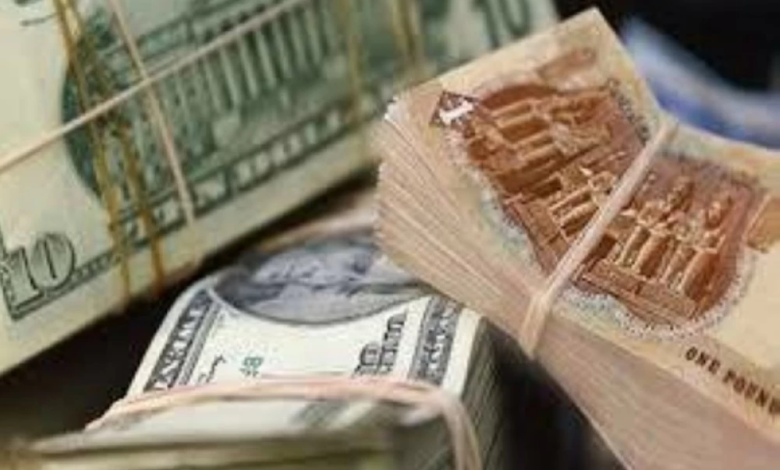
The price of the dollar today against the Egyptian pound after the interest rate cut in 2025

The US dollar saw renewed movement against the Egyptian pound, continuing its slight upward trend that began at the end of last week's trading. This comes as markets await the effects of the new monetary policies adopted by the Central Bank of Egypt, particularly regarding interest rates.
Details of exchange rates in Egyptian banks
According to updated banking statistics and data, the average exchange rate of the US dollar at the Central Bank of Egypt was recorded at 47.53 Egyptian pounds for buying and 47.67 Egyptian pounds for selling. A survey conducted by Al Arabiya Business revealed slight variations between different banks
- The highest price: It came in Abu Dhabi Islamic Bank, where the dollar recorded 47.60 pounds for buying and 47.70 pounds for selling.
- Lowest price: Recorded at the Egyptian Arab Real Estate Bank at a level of 47.48 Egyptian pounds for buying and 47.58 Egyptian pounds for selling.
- Stability in major banks: In the National Bank of Egypt, Banque Misr, Commercial International Bank (CIB), and Bank of Alexandria, the price remained stable at 47.57 Egyptian pounds for buying and 47.67 Egyptian pounds for selling.
- Other banks: The dollar recorded a level of 47.55 Egyptian pounds for buying at Midbank, Al Baraka Bank, and Suez Canal Bank.
Economic context: Interest rate cuts and their impact
This slight movement in the exchange rate is closely linked to the recent decisions of the Monetary Policy Committee of the Central Bank of Egypt. At its eighth and final meeting of 2025, the committee decided to cut interest rates by 100 basis points (1%), bringing the deposit and lending rates to 20% and 21%, respectively. This is the fifth rate cut since the beginning of 2025, reflecting a clear shift towards easing monetary policy after a period of tightening.
Historical background and expected effects
From an economic perspective, lower interest rates often reduce the attractiveness of the local currency to foreign investors in government debt instruments (hot money), which can put slight pressure on the exchange rate, thus explaining the modest rise in the dollar. However, this trend supports foreign direct investment and reduces borrowing costs for businesses and individuals, thereby stimulating economic growth.
These developments indicate the success of Egypt's "flexible exchange rate" mechanism, where the currency's value is determined by supply and demand without heavy administrative intervention. This has eliminated the parallel market and provided relative stability in trade and import transactions. The current dollar level (around 47.50 Egyptian pounds) is seen as a true reflection of the currency's value given current economic indicators and declining inflation rates, which have allowed the central bank to lower interest rates.