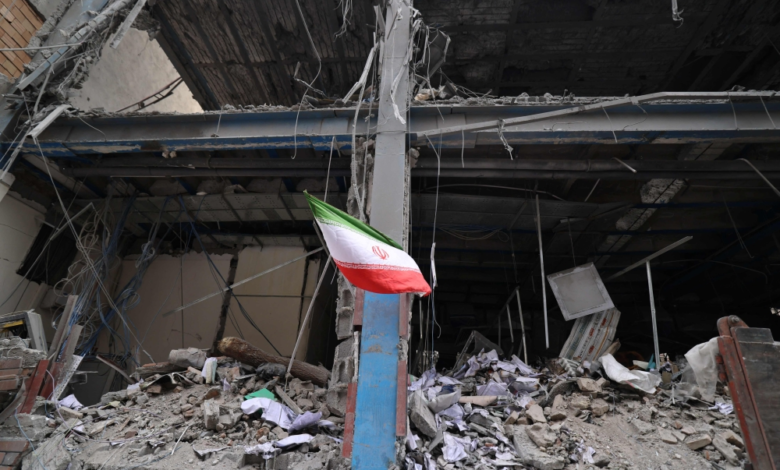

In a significant development reflecting a shift in US foreign policy, US Treasury Secretary Scott Bisnett stated that Washington may find itself compelled to resort to harsher military options and escalate its attacks against Iran as part of a strategy ultimately aimed at ending the state of war and ongoing tension in the Middle East. These remarks come at a time of unprecedented turmoil in the region, where economic and geopolitical interests are intricately intertwined.
The "escalation for de-escalation" strategy
During a television interview on NBC's "Meet the Press," Treasury Secretary Bill Bessett was asked whether the Trump administration sought to end the war or escalate it. Bessett's response was decisive, explaining that the two were not mutually exclusive. He cited a well-known strategic principle in international relations: "Sometimes you have to escalate in order to de-escalate." He added firmly that this was "the only language the Iranians understand," implying the need to demonstrate deterrence.
These statements coincide with strongly worded threats issued by US President Donald Trump, who vowed to destroy vital Iranian energy facilities if Tehran does not fully reopen the Strait of Hormuz to international shipping. This threat came just one day after Trump hinted that Washington was nearing its strategic objectives and was considering a gradual "scaling back" of its military efforts against the Iranian regime, reflecting a "carrot and stick" policy in dealing with Tehran.
The strategic importance of the Strait of Hormuz and its global impact
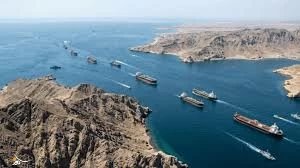
The Strait of Hormuz is one of the world's most strategically important waterways, connecting the Persian Gulf, the Gulf of Oman, and the Arabian Sea. Its vital importance lies in its role as a major artery for global energy flows; approximately one-fifth of the world's oil and liquefied natural gas supplies pass through it. Historically, Iran has used the threat of closing the strait as a political and economic pressure tactic in the face of Western sanctions and tensions with the United States.
Iran’s recent threat to target shipping through this vital strait has triggered panic in global markets, resulting in a sharp and sudden surge in energy prices worldwide. This surge threatens to exacerbate global inflation and harm major economies heavily reliant on energy imports from the Middle East.
Suspension of sanctions and its repercussions on energy markets
In an attempt to contain these economic disturbances and prevent the energy crisis from worsening, US Treasury Secretary Scott Bisnett took a tactical step by temporarily suspending US sanctions on Iranian and Russian oil shipments already on board ships and tankers at sea. This move aims to release these quantities into the markets to stabilize prices and reassure investors.
However, this move was not without controversy. The US administration faced sharp criticism from political and security circles who viewed the suspension as a financial lifeline for Tehran. Critics argue that allowing the sale of this oil will provide direct cash to the Iranian government, contradicting Washington's efforts to cut off Tehran's funding sources, especially given the ongoing indirect and direct confrontations between Iran on one side, and the United States and Israel on the other.
The historical and geopolitical context of the conflict
To understand the dimensions of this escalation, one must look at the historical context of US-Iranian relations, which have been characterized by hostility since the Islamic Revolution of 1979. This tension has been significantly exacerbated by the US unilateral withdrawal from the Iran nuclear deal in 2018 and the reimposition of harsh economic sanctions as part of the “maximum pressure” campaign.
Regionally, Iran supports a network of armed factions in the region, putting it in constant confrontation with Washington's allies. Amid current tensions in the Middle East, the United States finds itself compelled to bolster its military presence to protect international shipping and ensure the security of its allies, making any direct clash with Iran potentially disastrous and capable of igniting a wider regional war.
Expected impact of escalation
- At the local level (United States): Escalation may affect domestic fuel prices, a sensitive issue for the American voter, and also requires huge budgets to support military actions.
- At the regional level: It puts the Arab Gulf states on alert, as these countries seek to avoid their territories or territorial waters becoming an arena of confrontation, with a focus on protecting their oil infrastructure.
- At the international level: Any actual closure of the Strait of Hormuz or an attack on oil facilities would lead to a global economic shock, prompting major oil-importing countries to intervene diplomatically to prevent the collapse of supply chains.
In conclusion, the statements of the current US administration reflect a delicate and dangerous balance between a show of military force to deter Tehran and economic maneuvering to ensure the stability of global markets, in a geopolitical chess game that may define the features of the Middle East for years to come.