
The impact of geopolitical tensions on global markets
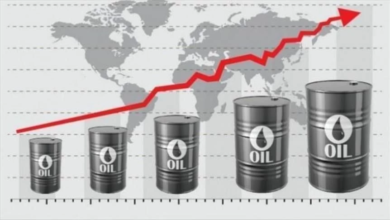
Amidst rapidly evolving developments, concerns about the escalating conflict in the Middle East have cast a long shadow over global financial markets. With crude oil prices continuing to rise, financial markets have experienced a surge in risk aversion, leading to a significant decline in US stock performance at the close of trading. Wall Street indices recorded losses for the third consecutive week, the first such streak in nearly a year, reflecting investor anxiety about the future of the global economy and the impact of the conflict.
US stock performance: Consecutive losses
At the close of trading, the Dow Jones Industrial Average fell 0.25%, or 118 points, to 46,559, posting a weekly loss of nearly 2%. Other indices fared no better. The broader S&P 500 declined 0.61%, losing 40 points to close at 6,632, a 1.60% drop for the week. The tech-heavy Nasdaq Composite also fell, dropping 0.93%, or 206 points, to 22,105, extending its weekly loss to 1.26%.
European and Asian markets are in decline
The declines weren't limited to the US market; they extended to European stocks, which also saw a notable drop. The Stoxx Europe 600 index fell 0.50% to 595 points, recording a weekly loss of 0.47%, amid selling pressure concentrated in the industrial and mining sectors. Specifically, the UK's FTSE 100 index declined 0.43% to 10,261 points, Germany's DAX index fell 0.60% to 23,447 points, and France's CAC 40 index dropped 0.91% to 7,911 points.
In Asia, specifically in Japan, the Nikkei 225 index closed down 1.16% at 53,819 points, while its broader counterpart, the Topix, fell 0.57% to 3,629 points, affected by the cautious global investment climate.
Historical context: Oil, wars, and markets
Historically, the Middle East has been a major artery of global energy supplies. Any military escalation in this vital region brings back memories of past oil crises for investors. When conflicts erupt, the geopolitical risk premium added to oil prices rises. This sudden increase in energy costs threatens to reignite inflation, putting major central banks, such as the US Federal Reserve and the European Central Bank, in a difficult position, as they may be forced to keep interest rates high for longer, which in turn puts pressure on stock valuations and reduces corporate profits.
Expected impact at the local, regional, and international levels
Internationally, these tensions are driving capital away from high-risk assets like stocks and towards safe havens such as gold, government bonds, and the US dollar. Regionally, while oil-exporting countries may see a short-term increase in revenue due to higher prices, the prevailing security instability is damaging the climate for foreign direct investment across the region and hindering sustainable economic development plans.
Domestically, in the United States and Europe, rising energy prices are directly impacting consumers through increased fuel, heating, and basic commodity costs. This erosion of purchasing power is leading to a decline in consumer spending, the primary driver of economic growth, thus explaining the current sharp downturn in financial market indices.