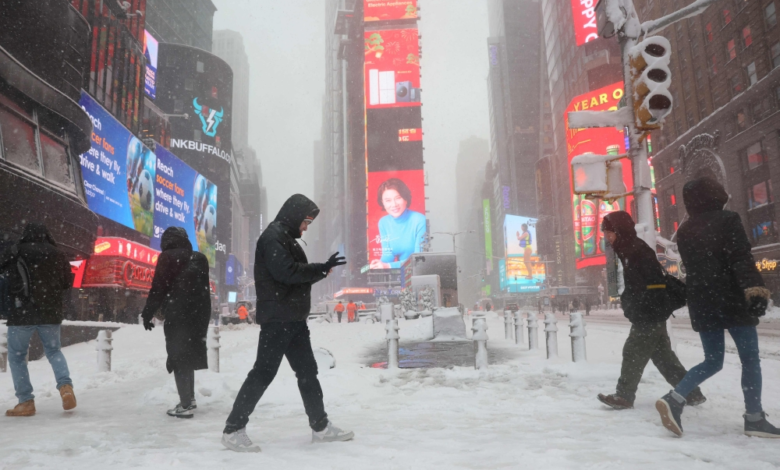
The United States is experiencing a near-total paralysis of its air transport sector, particularly in the Northeast, due to a powerful snowstorm that has severely disrupted travel. These harsh weather conditions, accompanied by heavy snowfall and strong winds, have brought air traffic to a near standstill in several key states.
Record numbers of flight cancellations
In a rapidly unfolding situation, thousands of flights were canceled as of Monday morning. According to data from 10:00 AM Eastern Time, the number of canceled flights exceeded 5,500, including both domestic and international flights connected to US airports. The cancellations were not immediate; hundreds of other flights were delayed, leaving travelers in a state of uncertainty and waiting.
Statistics indicate that yesterday, Sunday, saw the cancellation of more than 4,000 flights, while events were anticipated with the cancellation of about 1,600 flights scheduled for tomorrow, Tuesday, which portends continued disruptions and an escalation of the crisis in the next few days.
The most affected airports
The greatest disruptions were concentrated at major airports, the lifeblood of air traffic on the East Coast. John F. Kennedy International Airport in New York and LaGuardia Airport saw the highest cancellation rates today. Disruptions also spread to other vital airports in Boston, Newark, New Jersey, Philadelphia, and Washington, D.C. This shutdown at these hub airports has a domino effect, impacting connecting flights worldwide.
General context and challenges of winter weather
This storm is part of the severe weather patterns that typically hit North America during the winter. However, the intensity of this storm and the heavy snowfall have made air safety procedures extremely complex. De-icing aircraft and runways takes considerable time in the freezing temperatures, and the near-zero visibility caused by strong winds makes takeoffs and landings extremely risky, something airlines avoid to ensure passenger safety.
Official warnings and travel advice
For its part, the National Weather Service described current travel conditions as "extremely difficult and near impossible" in the areas at the storm's center. Given these conditions, the Federal Aviation Administration urged all travelers to stay updated and not to proceed to airports until they had checked their flight status on airline websites.
Travel experts advise that in such circumstances, it is necessary to contact airlines in advance to reschedule flights or look for alternatives, as it is expected that operations will take several days to return to normal even after the storm subsides, due to the accumulation of postponed flights and the overcrowding of travelers.