
Details of the double attack on Iranian cities
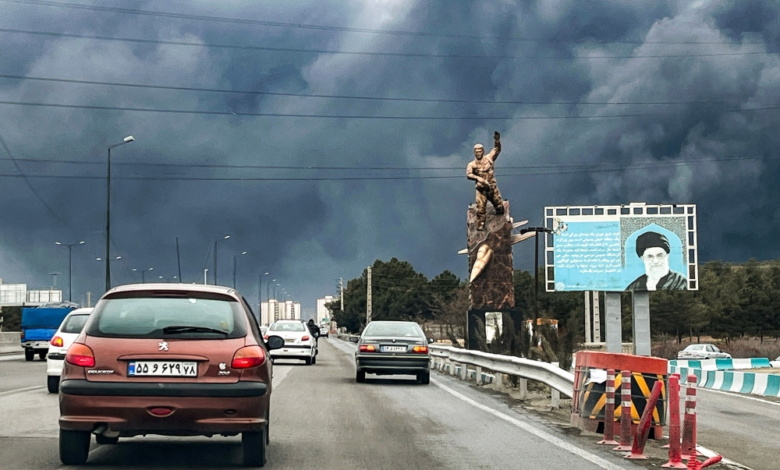
In a highly dangerous security and military development, Iranian state media reported that several vital areas across the Islamic Republic, including the capital Tehran, were subjected to intense airstrikes described as joint US-Israeli attacks. This event represents an unprecedented escalation in the rising tensions in the Middle East and signals a fundamental shift in the rules of engagement.
Targeted locations and initial loss extent
The strikes were not limited to the capital; the scope of the attacks extended to strategically important provinces. Airstrikes targeted sites in Lorestan province and the city of Hamadan in western Iran, as well as Fars province in the south. The Iranian news agency Tasnim reported that seven people were killed and 56 others were injured in varying degrees after a bombing of residential areas in the city of Dorud in Lorestan province. Meanwhile, the Mizan website, affiliated with the Iranian judiciary, confirmed that the airstrikes also targeted a judicial building in Fars province, reflecting the expansion of the targets to include civilian and government infrastructure.
The historical context of shadow warfare and direct escalation
These raids come within a complex historical context characterized by what is known as a “shadow war” between Tehran on one side, and Washington and Tel Aviv on the other. Over the past years, the parties have exchanged indirect attacks through targeting vital interests, cyber operations, strikes against Iranian nuclear facilities, and assassinations of prominent military and scientific figures. However, launching direct and declared military strikes deep inside Iran represents a dangerous strategic shift, moving the conflict from the realm of shadow warfare to direct confrontation.
Strategic importance and expected repercussions
Local and regional impact
Domestically, these attacks present the Iranian leadership with a significant security and military challenge, potentially prompting escalatory measures in response to this violation of its sovereignty. Regionally, this event raises serious concerns about the outbreak of a full-blown regional war, particularly given the existing tensions in Gaza, Lebanon, and the Red Sea. The direct US involvement in these raids complicates the diplomatic landscape and puts Washington's allies in the region on high alert for any security repercussions.
International and economic repercussions
Internationally, these developments are expected to trigger urgent action within the United Nations and the Security Council to prevent the region from sliding into further chaos, amid anticipation of the positions of major powers such as Russia and China. Economically, any military tensions in Iran, which overlooks the strategic Strait of Hormuz, are directly linked to global energy prices. Fears of disruptions to oil and gas supplies could lead to sharp fluctuations in global markets, adding further burdens to the global economy.