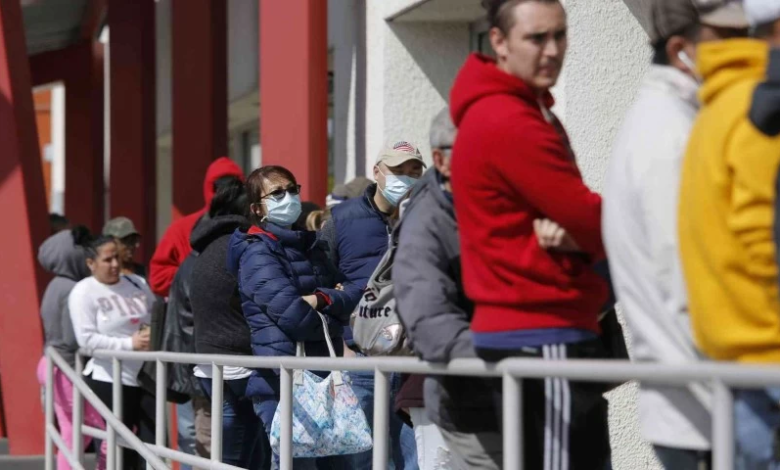
The US labor market saw some movement last week, with official data showing a slight increase in the number of Americans filing new claims for unemployment benefits. This report comes at a time of uncertainty in the US economy due to political and economic tensions surrounding trade policies and tariffs.
Ministry of Labor data and the impact of seasonal factors
The U.S. Labor Department reported today that initial applications for state unemployment benefits rose by 4,000 to a seasonally adjusted 212,000 for the week ending February 21. Despite this increase, the figures remain at historically low levels, reflecting a relatively stable labor market.
Economic analysts have pointed out that the data may have been affected by "fog" resulting from seasonal factors, specifically the "Presidents' Day" holiday that included last week, as public holidays often lead to short-term fluctuations in the accuracy of weekly data and difficulty in accurate seasonal adjustment.
Labor market stability despite challenges
Despite the slight increase, the fact that jobless claims remained at 212,000 is a positive indicator of continued stability in the US labor market. This follows a period of slowdown last year, driven primarily by uncertainty among employers and investors due to widespread tariffs and protectionist trade policies.
Unemployment benefit data is seen as one of the most important indicators for measuring the health of the economy, as a decrease in layoffs indicates that companies are still retaining their employees despite global economic challenges and rising borrowing costs.
Tariff dispute and the Supreme Court
This economic data comes amid a complex political and economic landscape, following the US Supreme Court's ruling last Friday that overturned tariffs imposed by President Donald Trump under a national emergency law. This decision prompted a swift response from the Trump administration.
In an escalation to compensate for the canceled tariffs, President Trump quickly imposed a comprehensive 10% global tariff for 150 days. This wasn't all; the rate was raised to 15% at the beginning of this week, further clouding the economic landscape and presenting American companies with new challenges related to supply chains and import costs, which could ultimately impact hiring decisions in the affected sectors.