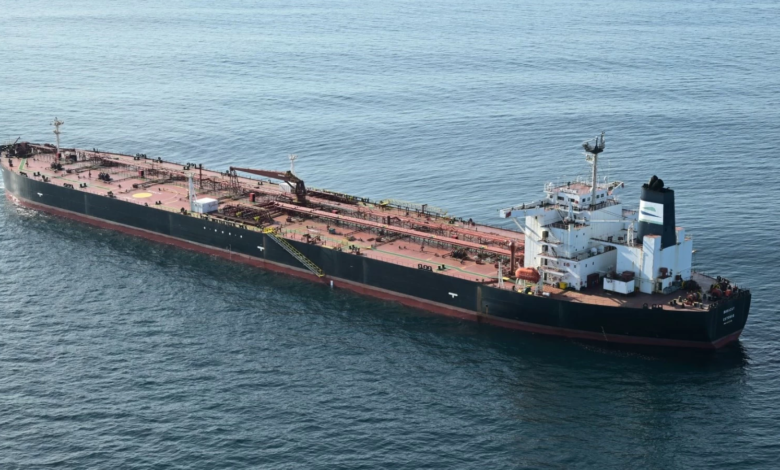

Global energy markets witnessed a remarkable and unexpected development, with international buyers rushing to secure Russian oil . This rapid move came just hours after the US Treasury Department announced a general and temporary license allowing the sale and delivery of Russian crude oil and petroleum products loaded onto ships up to a specified date. This exemption is valid until April 11.
Details of the US decision and the rush of international buyers
This license, described by the US Treasury as a "limited and temporary measure," aims to increase global oil supplies and achieve tangible stability in energy markets. CNBC reported that major energy-consuming nations such as Thailand and India have officially declared their readiness to immediately resume or increase purchases of Russian oil upon the issuance of the new license. In a related development, reports indicate that Japan is currently considering resuming imports of Russian crude, a strategic move that could reshape the global oil trade landscape, at least temporarily.
General context and historical background of sanctions on Russian oil
To understand the implications of this decision, it is necessary to return to the recent historical context. Since the outbreak of the Russian-Ukrainian war in early 2012, the United States and its G7 allies have led a campaign of intense pressure on Moscow, including imposing a price ceiling on Russian oil at $60 per barrel. The primary objective of these sanctions was to reduce the financial revenues Russia uses to fund its military operations, while ensuring that Russian oil continued to flow to the markets to avoid catastrophic price shocks. However, the accumulation of shipments stranded at sea and the increasing complexities of supply chains prompted Washington to issue this waiver to offload these quantities without granting Russia long-term financial benefits.
The role of geopolitical tensions in the Middle East
This tactical retreat did not come out of nowhere; rather, it was imposed by the exceptional circumstances currently affecting energy markets. The markets are suffering from severe volatility due to escalating geopolitical tensions in the Middle East. Fears of a partial closure of the Strait of Hormuz, coupled with threats to navigation in the Red Sea, have led to increased shipping and insurance costs. These ongoing conflicts have previously driven crude oil prices to record highs, exceeding $100 per barrel, creating immense inflationary pressure on Western economies and prompting US intervention to stabilize prices.
Importance and expected impact on global and local markets
This temporary measure has far-reaching implications on several levels. Internationally , this temporary influx is expected to help stabilize global prices and curb inflation, which threatens global economic growth. Regionally , Asian energy importers, such as India, which has demonstrated its remarkable ability to absorb tens of millions of barrels within days, benefit from this opportunity to secure competitively priced supplies. Domestically, in the United States , stable oil prices have a positive impact on domestic fuel prices, a crucial factor in economic stability.
In conclusion, although this license represents a breath of fresh air for the troubled energy markets, it simultaneously raises fundamental questions about the sustainability and effectiveness of US policy towards sanctions imposed on Russia, especially in light of the successive energy crises that prove day after day the interconnectedness and sensitivity of the global economy.