The water-sharing agreement between the US and Mexico avoids tariffs for both countries

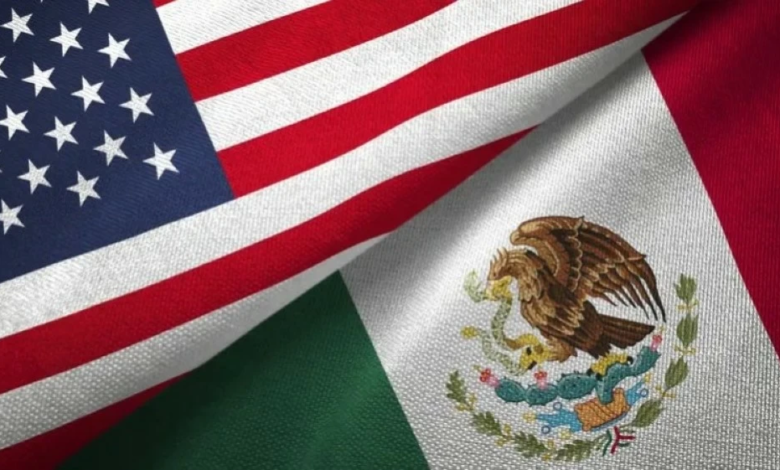
The US Department of Agriculture officially announced a strategic agreement with Mexico on the contentious issue of water sharing between the two countries, a move that came to defuse an imminent diplomatic and trade crisis, after US President Donald Trump threatened to impose punitive tariffs on Mexican imports because of Mexico's delay in fulfilling its water obligations.
Details of the agreement and urgent solutions
The ministry explained in its statement that the new agreement primarily aims to secure water rights for farmers and ranchers in the United States, particularly in Texas, which has suffered from severe water shortages. Under this agreement, Mexico has agreed to release 250 million cubic meters of water starting this week as an initial step to address part of the accumulated deficit.
US Agriculture Secretary Brooke Rollins noted that US pressure had yielded tangible results, with Mexico providing more water in one year than in the previous four years combined, reflecting the seriousness of both sides in turning the page on the current dispute before the end of next January.
Historical background: The 1944 treaty and the balance of interests
To understand the depth of the crisis, one must return to the 1944 Water Treaty , which governs the management of shared water resources between the two countries. This treaty obligates the United States to supply Mexico with approximately 1.85 billion cubic meters of water annually from the Colorado River. In return, Mexico is required to transfer at least 432 million cubic meters annually from the Rio Bravo River (known in the United States as the Rio Grande) to the United States, in five-year accounting cycles.
The current dispute arose as a result of Mexico's water deficit accumulating to more than one billion cubic meters over the past five years, which Washington considered a clear violation of the terms of the international treaty, prompting direct presidential intervention.
Avoid a trade war and economic repercussions
The threat of imposing a 5% tariff on all Mexican products significantly accelerated the negotiations. Mexico is the United States' largest trading partner, and any tariff escalation would have led to widespread disruptions in supply chains and higher prices for consumers in both countries. Therefore, this water agreement is seen not only as a solution to an agricultural problem but also as a preventative measure that protected North American economic relations from a potential setback.
Future challenges and the Mexican position
For his part, Roberto Velasco, an official at the Mexican Ministry of Foreign Affairs, affirmed his country's full commitment to the treaty, noting that the challenge lies not only in water availability but also in the operational capacity of pipelines and infrastructure, which makes it difficult to meet the massive US demands within short timeframes. This agreement underscores the importance of bilateral cooperation in addressing the challenges of drought and resource scarcity imposed by climate change on border regions.