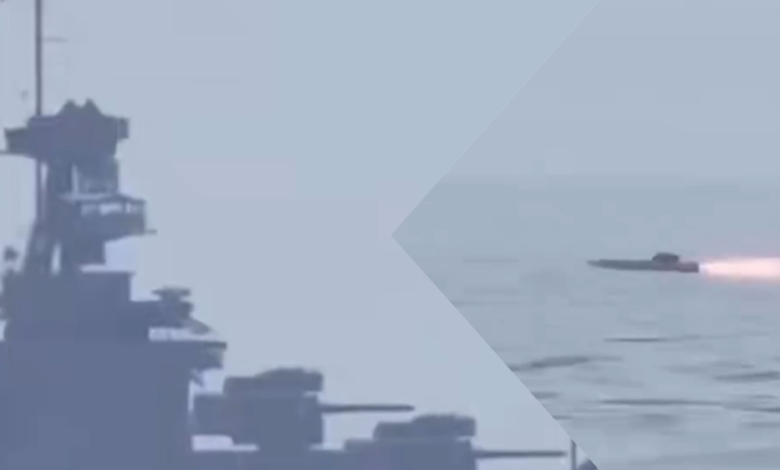

The US military announced it had conducted precision strikes targeting Iranian anti-ship missile sites near Strait of Hormuz . This operation comes amid escalating regional tensions, and involved the use of 5,000-pound bunker-buster bombs, among the most powerful weapons in the US arsenal designed to destroy underground military targets.
U.S. Central Command statement
In detailing the operation, U.S. Central Command (CENTCOM) issued an official statement via its “X” platform (formerly Twitter) on Tuesday, confirming the success of U.S. forces in using several bunker-buster munitions against fortified Iranian missile sites on the Iranian coast overlooking the Strait of Hormuz. The statement explained that the Iranian anti-ship cruise missiles positioned at these sites posed a direct and serious threat to international shipping in this vital waterway.
The strategic importance of the Strait of Hormuz and its historical background
The Strait of Hormuz is one of the world's most important and sensitive waterways, connecting the Persian Gulf, the Gulf of Oman, and the Arabian Sea. Its strategic importance lies in its role as a vital artery for global energy supplies, with approximately one-fifth of the world's daily oil consumption passing through it. Historically, the strait has been a flashpoint between Washington and Tehran, with Iran repeatedly threatening to close it in response to sanctions or military tensions. In response, the United States has bolstered its naval presence to ensure freedom of navigation. These recent strikes appear to be a preemptive response to Iran's strategy of constructing underground "missile cities" along its coastline to threaten commercial and military vessels.
Expected repercussions of the US strikes
On the economic and international fronts, these developments on the ground have significant implications. Any military operations near the Strait of Hormuz are expected to cause immediate volatility in global energy markets due to fears of supply chain disruptions. Regionally, these strikes put countries in the region on high alert, while also sending a strong international deterrent message that the United States will not tolerate any threat that impedes global trade or endangers international navigation.
Trump criticizes NATO and the British position
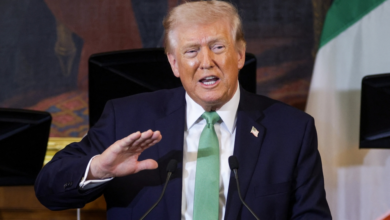
On the political front, these developments provoked a sharp reaction from US President Donald Trump. On Tuesday, Trump launched a scathing attack on several NATO , describing their refusal to help the United States secure the Strait of Hormuz as a “stupid mistake.” These remarks came amid Iranian threats and a military escalation in the region.
Speaking from the Oval Office, Trump said, “I think NATO is making a really stupid mistake.” He also asserted via his social media account Truth Social that the United States no longer needs allies’ help to secure this strategic corridor for the global economy. Trump’s criticism wasn’t limited to NATO as a whole; he specifically singled out British Prime Minister Keir Starmer, claiming he had made “the wrong choice” by not providing sufficient support to Washington amidst the ongoing conflicts in the Middle East.